
Day 2: Bigger Back workout

Overhand Machine / Barbell Row Round 1
-
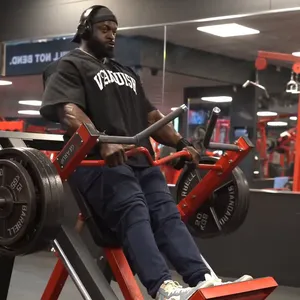
SET 1 - prep set
Weight: not too heavy, but enough for 15 reps (for example, 15 kg per side). Use an overhand grip. If you don’t have this machine at your gym, use a barbell and follow the same technique. Stretch your back as you lower the weight, then pull toward your lower abs. As you start pulling, lift your upper body slightly, but don’t come up too far. At the top, push your chest up and bring your shoulders back: if you focus on lifting your chest, your shoulders will naturally move back.
Reps: 12 - 15 -
Rest: 2 m
-
SET 2 - working set
Weight: 20% heavier (for example, 20 kg per side).
Reps: 10 - 12 -
Rest: 2 m
-
SET 3 - working set
Weight: 20% heavier (for example, 25 kg per side).
Reps: 10 -
Rest: 2 m
-
SET 4 - working set
Weight: same as in the previous set, or 20% heavier (for example, 25-30 kg per side).
Reps: 8 - 10 -
Rest: 2 m
Chest-supported T-bar Row Round 2
-
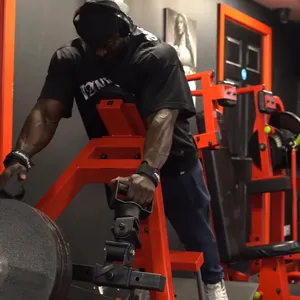
SET 1 - preparatory set
Weight: heavy enough for 12 reps (example: 15kg plates). Use a wide grip to target the upper back as much as possible. Relax your arms at the bottom, and as you pull, lift your chest up and bring your shoulders back. If you don’t have this machine at your gym, use a regular bent-over T-bar row and follow the same technique. If possible, use a wide grip to keep the focus on the upper back.
Reps: 12 -
Rest: 2 m
-
SET 2
Weight: 20-30% heavier (example: 20kg plates). Use a wide grip to target the upper back as much as possible. Relax your arms at the bottom, and as you pull, lift your chest up and bring your shoulders back. If you don’t have this machine at your gym, use a regular bent-over T-bar row and follow the same technique. If possible, use a wide grip to keep the focus on the upper back.
Reps: 10 - 12 -
Rest: 2 m
-
SET 3
Weight: 20-30% heavier (example: 25kg plates). Don’t let the weight drop quickly. Lower it slowly for 2–3 seconds, as controlling the negative part of the rep is very important.
Reps: 8 - 10 -
Rest: 2 m
Chest-supported Seated Row Round 3
-
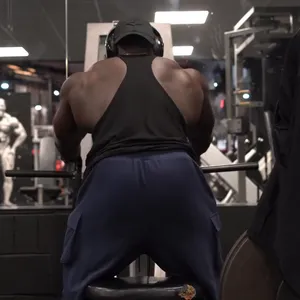
SET 1
Weight: heavy enough for 12 reps (example: 30kg). Lower the seat so the handles are in line with your lower chest. Use this grip to target the upper back. Fully stretch your arms during the negative part of the rep. As you pull, lift your chest up and bring your shoulders back. At the end of each rep, squeeze your back for 1–2 seconds. Think about raising your clavicle toward the ceiling, as if you were trying to balance a bottle of water on your upper chest without letting it fall.
Reps: 10 - 12 -
Rest: 2 m
-
SET 2
Weight: 20% heavier (example: 35kg). Lower the seat so the handles are in line with your lower chest. Use this grip to target the upper back. Fully stretch your arms during the negative part of the rep. As you pull, lift your chest up and bring your shoulders back. At the end of each rep, squeeze your back for 1–2 seconds. Think about raising your clavicle toward the ceiling, as if you were trying to balance a bottle of water on your upper chest without letting it fall.
Reps: 10 - 12 -
Rest: 2 m
-
SET 3
Weight: same as in the previous set (example: 35kg). Lower the seat so the handles are in line with your lower chest. Use this grip to target the upper back. Fully stretch your arms during the negative part of the rep. As you pull, lift your chest up and bring your shoulders back. At the end of each rep, squeeze your back for 1–2 seconds. Think about raising your clavicle toward the ceiling, as if you were trying to balance a bottle of water on your upper chest without letting it fall.
Reps: 8 - 10 -
Rest: 2 m
Lat Pulldown Round 4
-
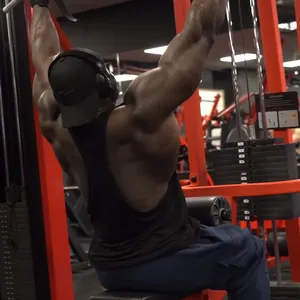
SET 1
Weight: heavy enough for 10 reps with 2 reps in reserve (example: 45kg). Grab the bar slightly wider than shoulder-width, but not too wide. A common mistake is using an extremely wide grip and holding the bar all the way at the ends. Pull your elbows directly toward your ribs, as if you are trying to touch them, and bring the bar toward your upper chest. As the bar reaches your chest, lift your chest up and pull your shoulders back. Think about raising your clavicle toward the ceiling, as if you were trying to balance a bottle of water on your upper chest. Do not lean backward. A common mistake is leaning too far back and using momentum to pull the weight. Instead, pull your elbows down toward your hips and lean back only slightly, just enough to bring the bar toward your upper chest.
Reps: 10 -
Rest: 2 m
-
SET 2
Weight: 20% heavier (example: 55kg). Pull your elbows directly toward your ribs, as if you are trying to touch them, and bring the bar toward your upper chest. As the bar reaches your chest, lift your chest up and pull your shoulders back. Think about raising your clavicle toward the ceiling, as if you were trying to balance a bottle of water on your upper chest. Do not lean backward. A common mistake is leaning too far back and using momentum to pull the weight. Instead, pull your elbows down toward your hips and lean back only slightly, just enough to bring the bar toward your upper chest.
Reps: 10 -
Rest: 2 m
-
SET 3
Weight: same as in the previous set (example: 55kg). Pull your elbows directly toward your ribs, as if you are trying to touch them, and bring the bar toward your upper chest. As the bar reaches your chest, lift your chest up and pull your shoulders back. Think about raising your clavicle toward the ceiling, as if you were trying to balance a bottle of water on your upper chest. Do not lean backward. A common mistake is leaning too far back and using momentum to pull the weight. Instead, pull your elbows down toward your hips and lean back only slightly, just enough to bring the bar toward your upper chest.
Reps: 8 - 10 -
Rest: 2 m
Seated Cable Row Round 5
-
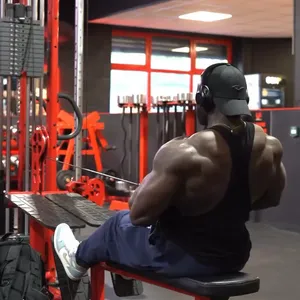
SET 1
Weight: heavy enough for 12 reps (example: 40kg). Lean forward before each pull to fully stretch your back. As you pull, lift your chest and drive your shoulders back, squeezing your back for 1–2 seconds at the end of the movement. Avoid leaning too far back, as this reduces back engagement, and never use momentum to complete the pull until the final few reps. There are two variations of this exercise. First variation: pull toward your upper abs with your elbows flared out to target the mid-back more. Second variation: pull toward your lower abs with your elbows tucked in to focus more on the latissimus.
Reps: 10 - 12 -
Rest: 2 m
-
SET 2
Weight: 20-30% heavier (example: 55kg). Lean forward before each pull to fully stretch your back. As you pull, lift your chest and drive your shoulders back, squeezing your back for 1–2 seconds at the end of the movement. Avoid leaning too far back, as this reduces back engagement, and never use momentum to complete the pull until the final few reps. There are two variations of this exercise. First variation: pull toward your upper abs with your elbows flared out to target the mid-back more. Second variation: pull toward your lower abs with your elbows tucked in to focus more on the latissimus.
Reps: 8 - 10 -
Rest: 2 m
-
SET 3
Weight: same as in the previous set or 10% heavier (example: 55kg). You can use a slight cheat on the final few reps. If the weight becomes too heavy in the middle of the set, rest for 3 seconds, then continue and complete the remaining reps.
Reps: 8 - 10 -
Rest: 2 m
Rope Pullover Round 6
-
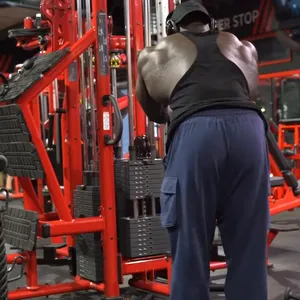
SET 1
Weight: not too heavy, and aim for more reps (example: 15kg). Stretch your back during the negative part of the rep. As you pull, keep your upper body mostly still and pull toward your hips. Keep your arms naturally bent throughout the entire movement and do not bend them more at the bottom as if you were doing a rope triceps extension. At the end of each rep, push your chest up and bring your shoulders back.
Reps: 12 - 15 -
Rest: 2 m
-
SET 2
Weight: 20 - 30% heavier (example: 20kg). Stretch your back during the negative part of the rep. As you pull, keep your upper body mostly still and pull toward your hips. Keep your arms naturally bent throughout the entire movement and do not bend them more at the bottom as if you were doing a rope triceps extension. At the end of each rep, push your chest up and bring your shoulders back.
Reps: 10 - 12 -
Rest: 2 m
-
SET 3
Weight: 20% heavier (example: 25kg). Stretch your back during the negative part of the rep. As you pull, keep your upper body mostly still and pull toward your hips. Keep your arms naturally bent throughout the entire movement and do not bend them more at the bottom as if you were doing a rope triceps extension. At the end of each rep, push your chest up and bring your shoulders back.
Reps: 8 - 10