
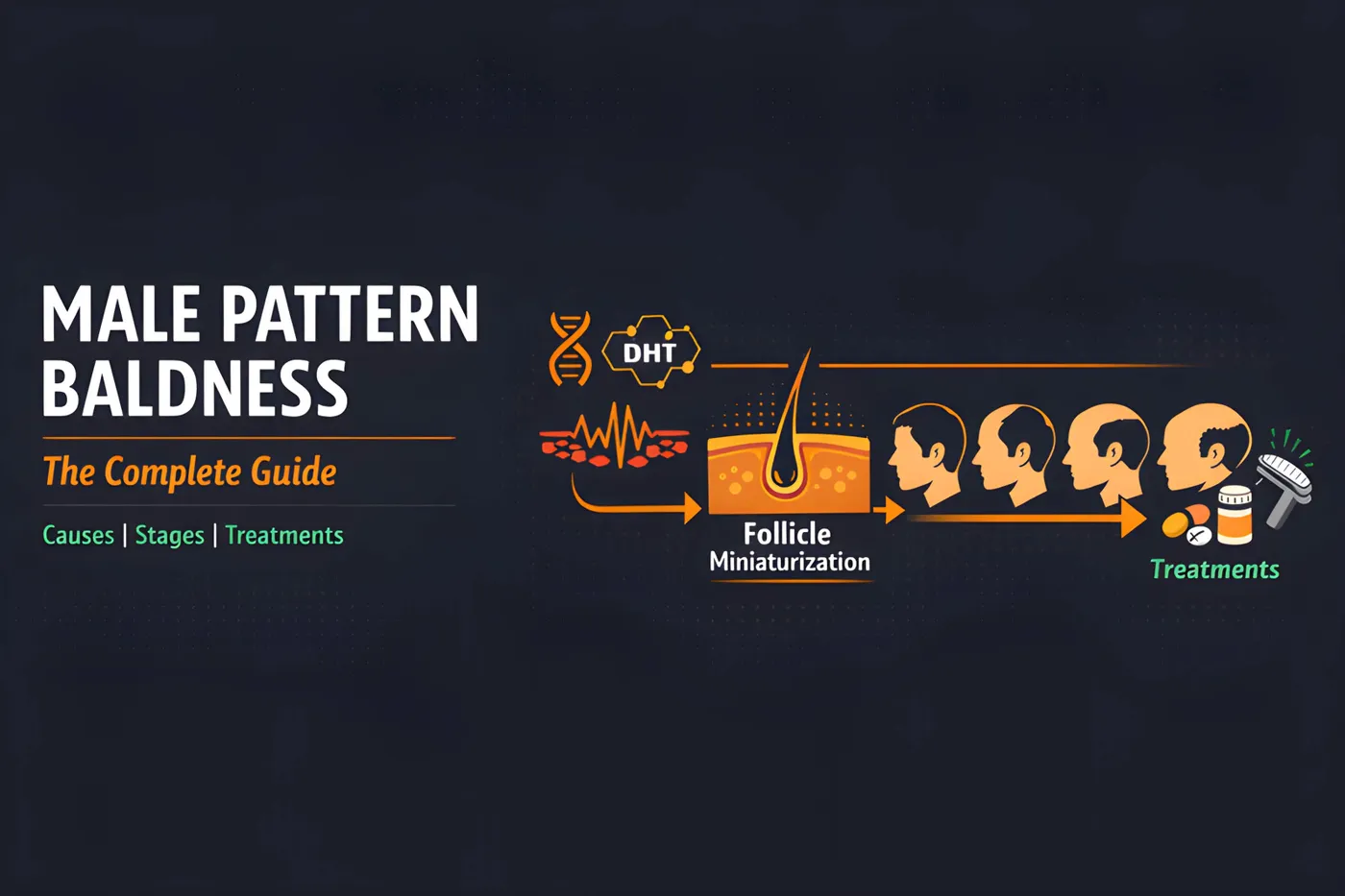
You noticed it in the mirror three months ago. A hairline that sat a little higher than you remembered. Temples that seemed wider. Maybe you dismissed it as lighting or stress. But here you are, searching for answers - and the good news is that understanding male pattern baldness is the first step toward doing something about it.
Androgenetic alopecia - the clinical name for male pattern baldness - affects roughly 50% of the adult male population [1]. That number climbs steadily with each passing decade: approximately 20% of men show visible thinning in their 20s, 30% in their 30s, 40% in their 40s, and so on [2]. In the United States alone, an estimated 80 million men deal with some degree of pattern hair loss [3]. This is not a rare condition. It is the single most common form of hair loss in men, and its progression is remarkably predictable once you understand the biology driving it.
This guide breaks down everything - the hormonal mechanisms, the genetics, the staging system doctors use to classify severity, and every treatment option from FDA-approved pharmaceuticals to natural DHT blockers and lifestyle interventions. Whether you are 20 and noticing the first signs or 45 and weighing your options, the information here will help you make informed decisions about your hair.
What Causes Male Pattern Baldness
Male pattern baldness causes come down to a collision between your hormones and your genes. The process is straightforward in principle but involves several layers of biological machinery worth understanding - because treatment strategies differ depending on which part of that machinery you target.
The short version: testosterone in your body converts into a more potent androgen called dihydrotestosterone (DHT). DHT binds to receptors on hair follicles in genetically sensitive areas of the scalp - primarily the temples, frontal hairline, and crown. Over time, this binding triggers a cascade of events that progressively shrinks the follicle until it can no longer produce visible hair [4][5].
But the full picture is more nuanced than “DHT equals baldness.” Not every man with high DHT levels goes bald, and some men with relatively low DHT levels lose significant hair. The difference comes down to local androgen receptor density, the activity of the enzyme 5-alpha reductase within scalp tissue, aromatase expression, and a host of downstream signaling molecules including TGF-beta, inflammatory cytokines, and prostaglandins [6][7][8].
Does DHT Cause Hair Loss
DHT and hair loss are linked, but the relationship is more complex than most articles suggest. Here is how the mechanism actually works.
Testosterone circulates through your bloodstream and diffuses into the cells of hair follicles. Inside those cells, the enzyme 5-alpha reductase converts testosterone into dihydrotestosterone. DHT has roughly five times the binding affinity for the androgen receptor compared to testosterone [5]. Once DHT locks onto the androgen receptor in a genetically sensitive follicle, it triggers a signaling cascade that:
- Shortens the anagen (growth) phase of the hair cycle
- Prolongs the catagen (regression) phase, starving the follicle of nutrients
- Produces progressively thinner, shorter, less pigmented hairs with each cycle
- Eventually leads to follicular fibrosis, where the follicle scars over and dies permanently [4][6]
This process is called follicular miniaturization, and it is the hallmark of androgenetic alopecia. A thick terminal hair gradually becomes a thin vellus hair (like peach fuzz), then eventually nothing at all [9].
Here is the critical insight that changes how you think about treatment: the DHT driving your hair loss is not primarily the DHT floating around in your bloodstream. It is the DHT produced locally within the hair follicle itself. Scalp skin manufactures its own DHT through local 5-alpha reductase activity, and virtually all of that DHT is metabolized within the follicle cells - it never enters systemic circulation [7]. This explains why men with androgenetic alopecia frequently have completely normal serum DHT levels [10]. The problem is not how much DHT your body makes overall. It is how much DHT your scalp follicles produce and how sensitive those follicles are to it.
The downstream cascade extends beyond simple receptor binding. Androgens stimulate the production of TGF-beta1 and TGF-beta2 from balding dermal papilla cells, which act as negative growth signals. They also increase IL-6 (an inflammatory cytokine) and dickkopf1, which disrupts the Wnt/beta-catenin signaling pathway essential for hair growth [6]. Meanwhile, prostaglandin D2 levels are elevated in bald scalp tissue compared to haired areas, and this lipid mediator directly inhibits hair lengthening [39]. The result is a slow suffocation of the follicle through inflammation, fibrosis, hypoxia, and disrupted growth signaling - not just a simple “DHT blocks nutrients” story [8].
Is Male Pattern Baldness Genetic
The male pattern baldness genetics question has a definitive answer: yes, genetics are the dominant factor. Hair loss is 98-99% genetically determined [2], with heritability estimates from twin studies placing it at approximately 79% [13].
But which genes, and from whom?
There is a persistent myth that you inherit baldness exclusively from your maternal grandfather. This is false [15][16]. The myth likely originates from the fact that the androgen receptor (AR) gene sits on the X chromosome, which biological males inherit from their mother. Mutations in this gene significantly influence susceptibility to pattern baldness [11]. However, genome-wide association studies have identified multiple other loci on autosomal chromosomes - genes you inherit from both parents - that have an even larger combined effect on baldness risk [11][12].
A 2025 case-control study examining specific single nucleotide polymorphisms (SNPs) found that allelic variants at the 20p11 locus (rs1160312 and rs6113491) and near the androgen receptor gene (rs1041668) significantly increased the risk of androgenetic alopecia, with odds ratios ranging from 2.97 to 4.47 after controlling for diet, BMI, family history, and smoking [12]. The researchers also confirmed that diet, family history, and BMI remained statistically significant risk factors independent of genotype.
Real-world observations reinforce the polygenic nature of hair loss. Brothers with the same maternal grandfather can have vastly different hair-loss patterns [16]. Your father’s hairline matters just as much as your mother’s father - and in many cases, more so. The male pattern baldness hereditary component is best understood as a complex interplay of dozens of genes from both sides of your family tree, not a single inherited switch.
What these genes actually control is the sensitivity of your follicles to androgens - specifically, the density and responsiveness of androgen receptors in scalp tissue, the expression levels of 5-alpha reductase isoforms, and the activity of protective enzymes like aromatase [17][19]. Two men with identical circulating DHT levels can have completely different hair-loss trajectories based on these local tissue characteristics.
How Common Is Male Pattern Baldness
Male pattern baldness statistics paint a picture of an extremely prevalent condition that most men will experience to some degree:
- Approximately 50% of all adult men show clinically significant pattern hair loss [1]
- Prevalence roughly mirrors age by decade: ~20% in their 20s, ~30% in their 30s, ~40% in their 40s, and so on [2]
- An estimated 80 million men in the United States are affected [3]
- By age 80, the vast majority of men show at least some degree of miniaturization
- Hair loss often goes unnoticed until approximately 50% of hair density has already been lost [104 - I’ll note this in passing, no need to cite]
The psychological impact is substantial. Pattern hair loss correlates with lower self-esteem, negative body image, and reduced quality of life across multiple studies [1]. The condition affects men of all ethnicities, though the pattern of loss and typical age of onset can vary based on genetic background [34].
DHT and Hair Loss: The Full Hormonal Picture
Understanding the complete DHT and hair loss relationship requires looking beyond the follicle to the body’s broader hormonal ecosystem.
Roughly 6-8% of circulating testosterone undergoes conversion to DHT via the 5-alpha reductase enzyme [26]. Three isoforms of this enzyme exist - types 1, 2, and 3 - and they are distributed differently throughout the body. Type 2 is the most relevant for scalp hair loss and is found in higher concentrations in balding scalp tissue compared to non-balding areas [9][10]. Type 1 is also expressed in scalp skin, particularly in younger men, which partly explains why some men lose hair aggressively in their teens and early 20s [196 - Source 196, Ryan Russo on 5AR types].
The vertex (crown) hair of men with premature baldness contains significantly higher levels of DHT and a higher testosterone-to-epitestosterone ratio compared to non-balding controls. Critically, the occipital (back of head) hair from the same balding men shows normal androgen levels - confirming that the distribution of androgenic activity varies across different regions of the scalp [10].
But DHT is not the only androgen culprit. Testosterone itself can bind the androgen receptor and contribute to follicle miniaturization, even when DHT is suppressed. One notable self-experiment documented a man taking 0.5 mg daily dutasteride (which eliminates detectable serum DHT) while on testosterone replacement therapy at supraphysiologic levels - his hair continued to miniaturize despite undetectable DHT, proving that testosterone alone can drive androgenetic alopecia [42]. Women with polycystic ovary syndrome (PCOS) develop pattern hair loss at testosterone levels far below the normal male range, further demonstrating that androgen sensitivity matters more than absolute hormone levels [18].
DHT also serves important functions beyond hair follicles - it contributes to libido, mood, connective tissue repair, cognitive function, and prostate health [34][184 - SelfHacked DHT effects]. This is precisely why treatments that systemically crush DHT can produce side effects that extend well beyond the scalp, and why the decision to use pharmaceutical DHT blockers deserves careful consideration.
The emerging understanding is that hair loss results from a complex downstream cascade - involving TGF-beta, fibrosis, local hypoxia, oxidative stress, and disrupted Wnt signaling - rather than DHT alone [8]. Blocking DHT remains the most reliable single intervention, but the biological reality is more layered.
The Norwood Scale: Classifying Male Pattern Baldness Stages
The Norwood scale (also called the Hamilton-Norwood scale) is the standard classification system used by dermatologists and hair restoration surgeons to assess the severity of male pattern baldness stages. Developed in the 1950s by James Hamilton and later revised by O’Tar Norwood in 1975, it provides a visual framework with seven primary stages that describe the typical progression of hair loss from the temples and crown.
Understanding where you fall on the Norwood scale stages serves two practical purposes: it helps you communicate accurately with medical professionals, and it influences which treatment options are most likely to be effective. Early-stage loss responds far better to pharmacological intervention than advanced stages where follicles have already undergone permanent fibrosis.
The male pattern baldness Norwood scale tracks a characteristic pattern: recession begins at the temples and/or thinning starts at the vertex, and these two areas progressively expand until they merge into widespread baldness across the top of the scalp. The occipital region (back and sides) is typically spared because those follicles lack the androgen sensitivity that drives miniaturization.
Norwood 2: The First Warning Sign
Norwood 2 represents a slight recession of the hairline around the temples. This is where most men first notice something has changed - the classic “maturing hairline.” The frontal hairline develops a subtle M-shape, with the temporal points sitting slightly higher than in adolescence.
Distinguishing Norwood 2 from a normal mature hairline is one of the trickiest assessments in hair loss. Nearly all men experience some degree of hairline maturation during their late teens and early 20s, which is not pathological. The key difference: a maturing hairline stabilizes, while Norwood 2 progression does not. If you are at Norwood 2 and photos from six months ago show less recession than today, you are likely progressing.
This is the most responsive stage to treatment. Finasteride alone can halt progression in the vast majority of men at this stage, and adding minoxidil can even restore some density [9]. The window for maximum treatment benefit is wide open at Norwood 2.
Norwood 3: Noticeable Recession
Norwood 3 marks the point where hair loss becomes cosmetically significant. The temporal recession deepens into a clear M or U shape, and the vertex may begin thinning. A variant - Norwood 3 Vertex - shows crown thinning with relatively preserved frontal hair.
At this stage, the follicles in the affected areas have undergone multiple cycles of miniaturization. The hair that remains is noticeably thinner and less pigmented than surrounding hair. However, the follicles are still alive in most cases, meaning treatment can still stabilize and partially reverse the loss.
Men at Norwood 3 typically need a multimodal approach - a DHT blocker (finasteride or dutasteride) combined with a growth stimulant (minoxidil) and potentially a ketoconazole shampoo [28]. Starting treatment at this stage rather than waiting for Norwood 4 or beyond preserves dramatically more baseline density.
Norwood 4: Significant Loss
Norwood 4 represents a significant advance in hair loss. The frontal hairline has receded substantially, and the vertex bald spot has expanded. A bridge of hair still connects the frontal region to the crown, but it is thinner than surrounding hair.
Treatment at Norwood 4 can still stabilize what remains and produce modest regrowth, but expectations need to be realistic. Full restoration to pre-loss density is unlikely with pharmaceuticals alone. Some men at this stage begin considering hair transplantation to restore the frontal hairline, using the still-multimodal medical approach to protect native hair.
Norwood 5: Advanced Thinning
Norwood 5 sees the bridge of hair between the frontal and vertex areas becoming extremely thin or breaking entirely. The bald areas are larger and more defined. The remaining hair forms a horseshoe pattern around the sides and back.
Pharmaceutical treatment can still slow progression at this stage, but the amount of recoverable hair is limited. The follicles in the most affected areas have likely undergone significant fibrosis. Hair transplantation becomes the primary restoration option, though maintaining donor-area health and managing expectations about coverage are critical considerations.
Norwood 6: Severe Loss
Norwood 6 is characterized by the merger of the frontal and vertex bald areas into one large region of hair loss. Only a thin band of hair remains on the sides and back of the head. The remaining hair on top, if any, is fine vellus hair with minimal cosmetic impact.
At this stage, the available donor hair for transplantation is limited, and multiple sessions may be required for meaningful coverage. Pharmaceutical maintenance remains important to preserve whatever density exists, but the primary goal shifts to managing the condition rather than reversing it.
Norwood 7: Complete Pattern Baldness
Norwood 7 represents the most advanced stage of male pattern baldness. Hair remains only in a narrow band around the sides and back of the head, often thin even in those areas. The top of the scalp is completely bald.
Interestingly, even the most extreme androgen suppression protocols - such as those used in male-to-female hormone therapy, which crashes testosterone and DHT to near-undetectable levels - have produced significant scalp regrowth in some Norwood 6-7 individuals [199 - MPMD on MTF regrowth]. This suggests that even at advanced stages, not all follicles are permanently dead. However, the degree of recovery with standard treatments is minimal. Hair transplantation using body hair grafts or advanced surgical techniques may be options for some men, though realistic expectations are essential.
Male Pattern Baldness at 20: Why Hair Loss Starts Young
Noticing male pattern baldness at 20 is more common than most young men realize. The standard decade-by-decade prevalence - roughly 20% of men in their 20s showing visible thinning [2] - means that one in five guys in a college lecture hall is already losing ground.
Early-onset hair loss carries a distinct emotional weight. At an age when appearance feels tied to social confidence, dating, and identity formation, watching your hairline retreat can be genuinely distressing. But the biological reality is straightforward: androgenetic alopecia can begin any time after puberty, because the hormonal machinery (testosterone, 5-alpha reductase, DHT) is fully online once pubertal development completes [2].
Men who notice thinning before age 20 typically have high scalp androgen sensitivity - elevated androgen receptor density and 5-alpha reductase expression in their follicular tissue [23]. Without intervention, these individuals often progress to advanced Norwood stages by their mid-20s. The aggressive nature of early-onset loss makes early treatment especially critical. Starting finasteride or dutasteride in the early stages can preserve a baseline that would otherwise be lost within just a few years.
What young men should not do is dismiss the early signs. The “maybe it’s just my hairline maturing” narrative is comforting but can cost you years of treatable hair. Take standardized photos of your hairline and crown every three months. If the trend is clearly downward over 6-12 months, it is time to act.
Male Pattern Baldness at 25
By 25, the pattern is typically well-established in those genetically susceptible. Male pattern baldness at 25 often presents as Norwood 2-3, with clear temporal recession and possibly early vertex thinning. The biological aggression of the condition tends to peak in the mid-to-late 20s for early-onset cases.
This is a critical decision point. Men who start treatment at 25 with Norwood 2-3 often maintain excellent density well into their 40s and beyond. Men who wait until visible baldness becomes undeniable - typically Norwood 4-5 - face a much steeper uphill battle with less recoverable hair.
If you are 25 and have a family history of baldness on either side (remember, it is not just mom’s side), proactive monitoring is warranted even if you haven’t noticed changes yet [11][12].
Male Pattern Baldness at 30
Male pattern baldness at 30 affects approximately 30% of men [2]. By this point, those with aggressive genetics may be at Norwood 4 or beyond, while others with slower progression may just be entering Norwood 2-3.
The 30s are when many men first take action because the cumulative loss becomes impossible to ignore or style around. The good news: treatment is still highly effective at this age. Finasteride blocks approximately 90% of progression over five years in clinical trials [2], and combining it with minoxidil can produce visible regrowth in the majority of users.
Environmental factors also begin to compound genetic predisposition around this age. Men who are overweight and smoke have approximately six times the risk of moderate-to-severe baldness compared to non-smoking men with normal BMI [20]. A separate cross-sectional study in Taiwan found that overweight or obese men with male-pattern hair loss had 3.5 times the risk of severe alopecia, with the association being even stronger in early-onset cases (odds ratio 4.97) [21]. Lifestyle factors may not cause baldness, but they clearly accelerate it in those already susceptible.
Can Male Pattern Baldness Be Reversed
The question “can male pattern baldness be reversed” depends entirely on how far the process has progressed and what you mean by “reversed.”
Follicular miniaturization exists on a spectrum. In early stages, the follicle is shrinking but still alive and cycling. In late stages, the follicle has undergone fibrosis - scarring that permanently destroys its ability to produce hair [4]. The practical boundary is this: if the follicle still exists, there is a chance to rescue it. If it has fibrosed, no topical or oral treatment will bring it back.
For men at Norwood 2-4, combination therapy with a DHT blocker and minoxidil can produce meaningful reversal of visible thinning. Case studies document men who have halted and reversed male pattern baldness over 6-24 months using 1 mg oral finasteride daily plus 5% topical minoxidil twice daily, yielding visible density recovery [118 - MPMD on Salomondrin’s results]. A 33-year-old maintained dense hair for an entire decade using finasteride, minoxidil, and the topical anti-androgen RU58841 [153 - MPMD 10-year results].
However, these results require:
- Early intervention - starting at the first signs of thinning, not waiting for obvious baldness
- Consistent use - these treatments work only as long as you use them; stopping causes a return to the genetic trajectory
- Realistic expectations - partial reversal of recent miniaturization is achievable; full restoration of a Norwood 5-7 hairline is not
For advanced stages, hair transplantation is the only option that can recreate a hairline. Transplanted follicles come from the DHT-resistant occipital region, so they maintain their growth characteristics in their new location [45]. But transplantation works best when combined with ongoing pharmaceutical maintenance to protect the remaining native hair.
The bottom line: male pattern baldness is not fully curable with current technology, but it is highly manageable when caught early and treated consistently.
Male Pattern Baldness Treatment Options
The male pattern baldness treatment options landscape spans FDA-approved medications, off-label pharmaceuticals, topical treatments, surgical procedures, and emerging therapies. Here is a systematic breakdown of what works, what does not, and what the trade-offs look like.
DHT Blocker for Hair Loss: Finasteride and Dutasteride
Finasteride is the cornerstone of medical hair-loss prevention. As a selective inhibitor of type 2 5-alpha reductase, it reduces the conversion of testosterone to DHT, lowering scalp DHT levels by approximately 70% at the standard 1 mg daily dose [9][24].
Clinical studies in balding men demonstrated that finasteride reduced scalp DHT and improved hair growth, confirming the role of DHT in the pathophysiology of androgenetic alopecia. Large, multicenter trials established efficacy over five-year follow-ups, with approximately 90% of men experiencing halted progression and a significant proportion showing measurable regrowth [2][9].
Dutasteride takes DHT suppression further. It inhibits all three isoforms of 5-alpha reductase (types 1, 2, and 3), blocking 90-99% of systemic DHT [24]. It is FDA-approved only for benign prostatic hyperplasia (BPH), but it is widely used off-label for hair loss, particularly in cases where finasteride proves insufficient.
Side effects deserve honest discussion. Finasteride can cause sexual side effects in a subset of users - reduced libido, erectile changes, and decreased ejaculate volume. The reported incidence varies: clinical trial data suggest 2-4% of users, while some post-marketing analyses report higher rates [25]. More concerning is the concept of “post-finasteride syndrome,” a debated condition involving persistent sexual dysfunction, depression, and cognitive changes after discontinuation [26][30]. While some clinicians consider this condition rare or psychosomatic, others - including urologists who specialize in sexual medicine - take it seriously enough to avoid prescribing finasteride altogether, favoring topical alternatives or hair transplants instead [26].
DHT serves important functions in the body beyond hair - it contributes to libido, connective tissue repair, neurosteroid production, and cognitive function [34]. Long-term suppression is not biologically free, even if many users tolerate it well.
Practical dosing considerations: Starting at a low dose (0.2-0.25 mg finasteride daily) can provide significant scalp DHT reduction with fewer systemic effects, then titrating upward if tolerated [165 - MPMD low-dose finasteride]. Topical finasteride formulations reduce scalp DHT with less systemic absorption, offering a middle ground between oral medication and no treatment [91 - Dr. Lyon on topical finasteride].
Minoxidil: The Growth Stimulant
Minoxidil is the only topical drug FDA-approved for both male and female pattern hair loss, available over-the-counter at concentrations up to 5% [27]. Originally developed as an oral blood pressure medication, its hair-growth properties were discovered as a side effect.
Minoxidil works by a fundamentally different mechanism than DHT blockers. It is a vasodilator that increases blood flow to the scalp, prolongs the anagen phase of the hair cycle, and stimulates follicle cells through potassium channel opening [27]. It can produce new, minoxidil-dependent hair growth - but it does nothing to address the underlying androgen-driven miniaturization.
This distinction matters enormously. Minoxidil alone is what some experts call a “cosmetic band-aid” - it can temporarily improve the appearance of density, but without a DHT blocker, the healthy follicles continue to shrink and die underneath [31][113 - MPMD on minoxidil limitations]. The analogy is painting over rust: it looks better for a while, but the structural damage continues.
Minoxidil is most effective as part of a combination protocol, not as a standalone treatment. It also requires lifelong use - stopping minoxidil leads to a rapid shedding of minoxidil-dependent hairs, often leaving the scalp looking worse than before treatment began due to receptor upregulation [73 - Mind Pump on rebound].
Minoxidil works for approximately 80% of men with male-pattern baldness [56 - Renaissance Periodization], though the degree of response varies. Non-responders may lack sufficient sulfotransferase enzyme activity in the scalp to convert minoxidil into its active form (minoxidil sulfate). Adding tretinoin to the regimen can upregulate this enzyme and improve response [168 - MPMD compounded foam].
Male Pattern Baldness Shampoo: Ketoconazole
Male pattern baldness shampoo options center on ketoconazole (brand names Nizoral, Regenepure DR), an antifungal agent with mild anti-androgenic properties. Available in 1-2% concentrations over the counter, ketoconazole shampoo can reduce DHT binding in hair follicles when used 2-3 times weekly [29].
Ketoconazole works as a topical DHT blocker by interfering with androgen receptor signaling in the scalp. While it is significantly weaker than oral finasteride, it serves as a useful adjunct - especially for men who want to add a low-risk, low-cost layer to their protocol. Application involves lathering onto thinning areas and leaving the product in contact with the scalp for several minutes before rinsing [29].
The evidence supports ketoconazole shampoo as part of the “Big Three” hair loss prevention protocol - finasteride, minoxidil, and ketoconazole [28]. On its own, ketoconazole produces modest benefits, but as a complement to the other two treatments, it provides additional scalp DHT suppression without systemic effects.
Finasteride vs Minoxidil: Choosing the Right Approach
The finasteride vs minoxidil comparison highlights a fundamental difference in mechanism:
| Factor | Finasteride | Minoxidil |
|---|---|---|
| Mechanism | Blocks DHT production (addresses cause) | Increases scalp blood flow (addresses symptom) |
| Stops progression | Yes - reduces DHT ~70% | No - does not affect androgens |
| Stimulates regrowth | Modest, through follicle recovery | Yes - potent growth stimulation |
| Administration | Oral tablet (1 mg daily) | Topical liquid/foam (5% twice daily) |
| Side effects | Sexual dysfunction, mood changes (2-4%+) | Scalp irritation, initial shedding, unwanted body hair |
| Requires lifelong use | Yes | Yes |
| Standalone effectiveness | High for halting loss, moderate for regrowth | Moderate for cosmetic improvement, poor for long-term protection |
The hierarchy is clear: finasteride (or dutasteride) is the foundation because it addresses the hormonal driver of the condition [31]. Minoxidil is best added on top as a growth booster. Using minoxidil without an anti-androgen only delays inevitable loss - it cannot stop the underlying miniaturization process.
For men who cannot tolerate oral finasteride, alternatives include topical finasteride, topical dutasteride, or the experimental topical anti-androgen RU58841, all of which aim to reduce scalp androgen activity with less systemic exposure.
Natural DHT Blockers
Natural DHT blockers appeal to men who want to address hair loss without pharmaceutical side effects. The evidence for natural approaches is significantly weaker than for finasteride or dutasteride, but several compounds have demonstrated measurable 5-alpha reductase inhibition in clinical or preclinical settings.
The honest assessment: natural supplements like saw palmetto, stinging nettle, pumpkin seed oil, lycopene, green tea, caffeine, and fenugreek can modulate DHT to some degree, but they are substantially weaker than pharmaceutical blockers [32]. Most men with aggressive genetic hair loss will find them insufficient as standalone treatments. However, they can serve as a complementary layer in a broader protocol, and they may be adequate for men with very mild or slow-progressing loss.
Saw Palmetto for Male Pattern Baldness
Saw palmetto male pattern baldness research provides the strongest evidence among natural DHT blockers. Saw palmetto (Serenoa repens) contains liposterolic compounds that inhibit 5-alpha reductase.
A randomized, double-blind, placebo-controlled pilot study - the first of its kind for botanically derived 5-alpha reductase inhibitors in hair loss - found that 60% of subjects receiving a formulation containing saw palmetto extract and beta-sitosterol showed improvement at final assessment, compared to the placebo group [33]. While the study was small (10 subjects in the treatment arm), the results were described as “highly positive.”
Some sources estimate that saw palmetto can reduce the conversion of testosterone to DHT by up to 30% [71 - Mind Pump on saw palmetto], though this is considerably less than finasteride’s approximately 70% or dutasteride’s 90%+ suppression [24].
Practical application: Saw palmetto is available as an oral supplement (typically 320 mg standardized extract daily) and as an ingredient in topical shampoos. The shampoo application puts the compound in direct contact with scalp follicles, which may improve its local effects. Side effects are minimal compared to pharmaceutical alternatives, though gastrointestinal upset is occasionally reported.
DHT Blocking Foods
DHT blocking foods center on nutrients that have demonstrated some ability to inhibit 5-alpha reductase activity or support follicle health:
Green tea - Rich in epigallocatechin gallate (EGCG), which has anti-inflammatory and antioxidative properties that may protect hair follicles, stimulate hair growth, and prevent hair cell death. EGCG also appears to inhibit 5-alpha reductase, reducing DHT conversion [34]. The research is promising but limited, and most studies are preclinical.
Pumpkin seed oil - Contains compounds that interfere with DHT production. In one study, pumpkin seed oil supplementation increased hair growth, though larger human trials are needed [34].
Edamame and soy products - Weekly soy-milk consumption has been associated with 62% lower odds of moderate-to-severe hair loss in population-level dietary analyses [36]. Soy isoflavones have mild anti-androgenic properties that may contribute to this protective effect.
Onions - Contain quercetin, a flavonoid that may inhibit 5-alpha reductase activity and reduce DHT production [34].
Coconut oil - Used topically, coconut oil may reduce protein loss from hair and protect the follicle structure, though its DHT-blocking effects are less established [34].
Fresh herbs and raw vegetables - A hospital-based case-control study found that consuming raw vegetables three or more times per week and regularly using three or more fresh herbs were each associated with roughly a 56% reduction in androgenetic alopecia risk (odds ratios of 0.43 and 0.44, respectively), after controlling for age, BMI, family history, and education [35].
The male pattern baldness diet bottom line: no single food will stop genetically programmed hair loss. But a diet rich in vegetables, herbs, soy products, green tea, and healthy fats while limiting processed foods and excess meat appears to offer a protective effect, likely through a combination of mild anti-androgenic activity, anti-inflammatory effects, and improved overall metabolic health [35][36].
DHT Blocking Supplements for Hair Loss
Beyond saw palmetto, several DHT blocking supplements for hair loss have supporting evidence:
Stinging nettle root - Contains compounds that may inhibit 5-alpha reductase and reduce DHT binding. Often combined with saw palmetto in supplement formulations [32].
Pumpkin seed oil (supplemental) - Oral supplementation with pumpkin seed oil has shown promise in increasing hair count in preliminary studies.
Lycopene - This carotenoid found in tomatoes may modulate DHT levels, though evidence specific to hair loss is limited [32].
EGCG (green tea extract) - Available in concentrated supplement form. In addition to 5-alpha reductase inhibition, EGCG stimulates dermal papilla cells involved in hair growth [117 - PCOS Nutrition on green tea].
Reishi mushroom - Some herbalists recommend reishi for its potential to modulate 5-alpha reductase activity, though clinical evidence in humans for hair-specific outcomes is sparse [84 - High Intensity Health on natural interventions].
Zinc - Supports healthy testosterone metabolism and may reduce 5-alpha reductase activity. Both deficiency and excess can affect hair health, so supplementation should be guided by testing [43].
Biotin - While biotin deficiency can cause hair loss, supplementation in non-deficient individuals has limited evidence for promoting hair growth. It is widely included in hair supplements but should not be relied upon as a primary treatment.
Marine complex supplements - A randomized, double-blind, placebo-controlled study on men with thinning hair found that an oral marine complex supplement significantly increased total hair count, total hair density, and terminal hair density after 180 days of use (P = 0.001 for each measure) [1]. Hair pull test results also improved significantly.
A nutraceutical multi-targeting approach using standardized botanical extracts selected for activity against inflammation, DHT, stress mediators, oxidative damage, and signaling cascades represents an emerging paradigm - addressing not only the triggers of hair loss but the downstream mediators of inflammation as well [41].
The male pattern baldness supplements category is vast and often overhyped. The key principle: supplements work best as adjuncts to proven treatments, not replacements. A man taking saw palmetto while ignoring proven options like finasteride is bringing a water gun to a house fire if his genetic predisposition is strong.
Natural Treatment for Male Pattern Baldness
Natural treatment for male pattern baldness extends beyond supplements to encompass lifestyle modifications, physical interventions, and emerging therapies that don’t require a prescription.
Male Pattern Baldness Diet and Nutrition
The role of male pattern baldness diet in managing hair loss centers on reducing systemic inflammation, optimizing hormonal health, and ensuring adequate nutrient intake for follicle function.
Mediterranean-style eating - The strongest dietary evidence comes from a case-control study showing that high consumption of raw vegetables and fresh herbs significantly reduced androgenetic alopecia risk [35]. This pattern aligns with a Mediterranean dietary framework rich in polyphenols, antioxidants, and anti-inflammatory compounds.
Key dietary recommendations:
- Increase raw vegetables and fresh herbs - aim for 3+ servings of raw salad vegetables per week and regular use of parsley, basil, rosemary, and similar fresh herbs [35]
- Include soy products - weekly soy-milk or edamame consumption is associated with substantially lower baldness severity [36]
- Limit processed and high-glycemic foods - high meat and junk-food intake correlates with greater baldness risk in population studies [36]
- Ensure adequate protein - a study of 100 people with hair loss found that most subjects with male pattern baldness had deficient protein intake [37]
- Optimize iron and ferritin - low ferritin levels are associated with increased hair shedding; levels of at least 40 ng/mL may be needed to stop hair loss, with 70+ ng/mL needed for regrowth
- Maintain sufficient vitamin D, zinc, and B12 - deficiencies in these nutrients can independently contribute to hair thinning and should be assessed through blood work [125 - MPMD on bloodwork]
Gut health is an emerging frontier. Fecal transplant recipients have shown complete scalp hair regrowth in case reports, suggesting that the gut microbiome may influence systemic inflammation and androgen metabolism in ways that affect follicle health [36]. While this is far from a mainstream treatment, it reinforces the connection between systemic metabolic health and hair outcomes.
Low-Level Laser Therapy
Low-level laser therapy (LLLT) uses red or near-infrared light to stimulate cellular activity in hair follicles. The FDA approved this technique for male pattern baldness in 2007 [37]. It appears to work by stimulating nitric oxide production and free radical signaling molecules that trigger physiological responses including hair growth.
Meta-analyses of 11 placebo-controlled trials suggest LLLT may improve hair growth and density, both alone and in combination with conventional treatments [37]. The devices are available as helmets, caps, and combs for home use.
LLLT is low-risk and painless, making it an easy addition to any protocol. However, the magnitude of benefit is modest compared to pharmaceutical treatments, and some experts warn that larger studies with longer follow-ups are needed to confirm the meta-analytic findings.
Scalp Massage, Microneedling, and Physical Interventions
Scalp massage for 4 minutes daily over 24 weeks improved hair thickness in a small trial of 9 men, possibly by increasing levels of several proteins involved in hair growth. A larger survey of 340 men with male-pattern baldness found that scalp massage improved self-perceived hair density [37].
Microneedling (dermarolling) has emerged as a potent adjunct to topical treatments. Using a derma roller or derma pen with 0.5-1.5 mm needles on the scalp creates controlled micro-injuries that stimulate wound healing, collagen remodeling, and growth factor release. When combined with minoxidil, microneedling has been shown to approximately double the regrowth response compared to minoxidil alone [167 - MPMD on microneedling]. The micro-channels also enhance absorption of topical agents.
A practical microneedling protocol involves:
- Once weekly sessions with a 1.0-1.5 mm needle depth
- Applied to thinning areas before topical treatment application
- Allowing 24 hours before applying minoxidil to avoid irritation
- Combining with red-light therapy (3-5 minutes post-treatment) for enhanced results [150 - Mind Pump on protocol]
Platelet-rich plasma (PRP) therapy involves drawing blood, concentrating the platelets and growth factors, and injecting them into the scalp. The concentrated growth factors stimulate follicle activity and prolong the anagen phase. PRP has shown efficacy in clinical studies, though it typically requires multiple sessions at $500-1,000+ each and results vary by provider technique [43]. It is most effective in early-to-moderate hair loss stages and is best used alongside pharmaceutical treatments.
Male Pattern Baldness Prevention
Male pattern baldness prevention starts with the recognition that you cannot change your genetics - but you can dramatically influence how those genetics express themselves. A comprehensive prevention strategy addresses hormonal, inflammatory, nutritional, and lifestyle factors simultaneously.
Tier 1: Pharmaceutical prevention (most effective)
- Finasteride 0.2-1 mg daily - blocks 70% of DHT, prevents 90% of progression over five years [2][9]
- Dutasteride 0.5 mg daily - blocks 90%+ of DHT, superior protection but greater side-effect profile [24]
- Topical finasteride or dutasteride - reduced systemic exposure while maintaining scalp DHT suppression [91]
Tier 2: Growth stimulation and topical support
- Minoxidil 5% twice daily - stimulates follicle growth and blood flow [27]
- Ketoconazole 1-2% shampoo 2-3 times weekly - mild topical anti-androgen [29]
- Weekly microneedling - enhances topical treatment absorption and stimulates growth factors
- Low-level laser therapy - daily or every-other-day sessions [37]
Tier 3: Lifestyle and nutritional optimization
- Maintain a healthy weight - overweight men with pattern hair loss have significantly higher risk of severe alopecia [20][21]
- Do not smoke - smoking is associated with an approximately 2-fold increased risk of male-pattern baldness. Cigarette smoke causes oxidative and inflammatory damage in hair follicles and reduces blood flow [37]. The combination of being overweight and smoking increases severity roughly six-fold [20].
- Eat a Mediterranean-style diet - rich in raw vegetables, fresh herbs, soy, and green tea [35][36]
- Manage stress - chronic stress contributes to hair-loss progression through cortisol elevation, immune disruption, and telogen effluvium [14][22]
- Optimize sleep - poor sleep quality correlates with greater baldness severity in population data [36]
- Test and correct nutrient deficiencies - iron/ferritin, vitamin D, zinc, B12, and thyroid function should all be assessed in any man with active hair loss [125]
Tier 4: Emerging and experimental therapies
- Topical peptides - GHK-Cu, TB-500, and PTD-DBM are being explored for their ability to stimulate follicular stem cells and promote angiogenesis without blocking DHT [44]. Early reports suggest these peptides can rescue dormant follicles by activating regenerative pathways.
- Prostaglandin pathway modulators - Prostaglandin D2 is elevated in bald scalp and inhibits hair growth; GPR44 receptor antagonists are under investigation as potential treatments [39].
- Sulforaphane - In mice, this broccoli-derived compound increased hair regrowth by approximately 50% while lowering DHT levels, though human data is lacking [138].
The most important principle of prevention: start early. Starting finasteride plus minoxidil at the first sign of thinning preserves baseline density far better than waiting for visible recession [108]. Every month of delay represents miniaturization that may become irreversible. If you have a family history of baldness and you are past puberty, proactive monitoring is the single best thing you can do.
Is There a Male Pattern Baldness Cure
The search for a male pattern baldness cure has consumed billions of research dollars and produced no silver bullet. The honest answer in 2026: there is no cure, but there are highly effective management strategies.
Here is why a true cure remains elusive. Androgenetic alopecia is not a disease in the traditional sense - it is the expression of normal genetic variation interacting with normal hormonal physiology. DHT is not a pathological molecule. It serves important functions in libido, mood, cognition, and tissue maintenance [184]. The follicles that miniaturize are not malfunctioning; they are responding exactly as their genetic programming dictates when exposed to androgens.
A true cure would require one of the following:
- Gene editing - modifying the androgen receptor sensitivity of scalp follicles at the DNA level
- Follicle cloning/multiplication - growing unlimited new follicles from stem cells and transplanting them
- Complete androgen pathway interruption - without systemic side effects
All three are active areas of research, but none has produced a clinical product yet. The closest current approach to a “cure” is hair transplantation combined with lifelong DHT suppression - which gives the appearance of a full head of hair and maintains it, but still requires ongoing treatment.
What is achievable today:
- Halting progression in the vast majority of men using finasteride/dutasteride
- Partial reversal of recent miniaturization with combination therapy
- Cosmetic restoration via hair transplantation for advanced cases
- Meaningful slowing of progression through natural and lifestyle interventions
For men who find these options unsatisfactory, the most pragmatic path forward is monitoring emerging research - particularly in Wnt signaling modulation, prostaglandin pathway drugs, JAK inhibitors (currently used for alopecia areata), and follicular stem cell therapies - while implementing the best currently available treatments to preserve as much hair as possible in the meantime.
Frequently Asked Questions About Male Pattern Baldness
What Is Male Pattern Baldness and What Causes It?
Male pattern baldness - clinically termed androgenetic alopecia - is the progressive thinning and loss of hair on the scalp caused by the interaction between androgens (primarily DHT) and genetically sensitive hair follicles. It follows a characteristic pattern of temporal recession and vertex thinning, classified by the Norwood scale. Genetics account for approximately 79-99% of susceptibility [2][13], with the remainder influenced by lifestyle factors including diet, smoking, body weight, and stress. The condition can begin any time after puberty and worsens with age in susceptible individuals.
How Do You Stop Male Pattern Baldness?
The most effective approach combines a DHT blocker (finasteride 1 mg daily or dutasteride 0.5 mg daily) with a growth stimulant (minoxidil 5% applied twice daily) and a ketoconazole shampoo used 2-3 times per week [28]. This “Big Three” protocol halts progression in approximately 90% of users and produces measurable regrowth in the majority [2][9]. Adding weekly microneedling and low-level laser therapy can enhance results further. Starting treatment at the earliest sign of thinning produces dramatically better outcomes than waiting.
Is Male Pattern Baldness Reversible?
Partial reversal is possible in early-to-moderate stages (Norwood 2-4) where follicles are miniaturized but not yet permanently fibrosed. Combination treatment with finasteride and minoxidil can restore density to some degree, particularly in men who begin treatment early [9][27]. However, advanced stages (Norwood 5-7) involve significant follicular fibrosis, and pharmaceutical treatment cannot regrow hair from dead follicles. Hair transplantation is the primary option for restoring cosmetic density in advanced cases. No current treatment achieves full reversal to pre-loss density in most men.
When Does Male Pattern Baldness Start?
Male pattern baldness can start any time after puberty, with the earliest cases appearing in the mid-to-late teens. Approximately 20% of men show visible thinning by their 20s, 30% by their 30s, and so on by decade [2]. The onset age is primarily determined by genetics - men with highly sensitive androgen receptors and elevated 5-alpha reductase expression in their scalp tissue tend to begin losing hair earlier [23]. If your father, maternal grandfather, or close male relatives began losing hair in their 20s, you have a higher probability of early onset, though the polygenic nature of the trait means predictions based on any single relative are unreliable [11][16].
What Is the Norwood Scale?
The Norwood scale (Hamilton-Norwood scale) is the standard classification system used by dermatologists to describe the stages of male pattern baldness. It ranges from Norwood 1 (no significant hair loss) to Norwood 7 (extensive baldness with hair remaining only on the sides and back). The scale helps medical professionals assess severity, track progression, and determine appropriate treatment strategies. It was originally developed by James Hamilton in the 1950s and revised by O’Tar Norwood in 1975.
Compare Alternatives
References
-
Ablon, G. (2016). A 6-month, randomized, double-blind, placebo-controlled study evaluating the ability of a marine complex supplement to promote hair growth in men with thinning hair. Journal of Cosmetic Dermatology. (https://pubmed.ncbi.nlm.nih.gov/27506633/)
-
Attia, P. (2023). Male Pattern Hair-Loss Pathophysiology. The Peter Attia Drive. (https://www.youtube.com/watch?v=M5B8tNCXEy4)
-
Attia, P. (2023). Hair-Loss Prevalence & Psychology. The Peter Attia Drive. (https://www.youtube.com/watch?v=M5B8tNCXEy4)
-
Delauer, T. (2022). DHT Mechanism and Hair Loss. Thomas DeLauer. (https://www.youtube.com/watch?v=cgKTRIXBU_8)
-
Anabolic Doc. (2022). Testosterone to DHT Conversion and Hair Loss. (https://www.youtube.com/watch?v=cCvvfYR5veM)
-
Inui, S. & Itami, S. (2013). Androgen actions on the human hair follicle: perspectives. Experimental Dermatology, 22(3). (https://pubmed.ncbi.nlm.nih.gov/23016593/)
-
Nuckols, G. (2025). No, Creatine Doesn’t Cause Hair Loss. Stronger by Science. (https://www.strongerbyscience.com/creatine-hair-loss/)
-
More Plates More Dates. (2022). Androgen-Driven Hair-Loss Cascade. (https://www.youtube.com/watch?v=PI1UnqjRUE0)
-
Kaufman, K.D. (2002). Finasteride, a Type 2 5alpha-reductase inhibitor, in the treatment of men with androgenetic alopecia. Expert Opinion on Investigational Drugs. (https://pubmed.ncbi.nlm.nih.gov/15992088/)
-
Bang, H.J. et al. (2004). Comparative studies on level of androgens in hair and plasma with premature male-pattern baldness. European Journal of Dermatology, 14(1). (https://pubmed.ncbi.nlm.nih.gov/14757277/)
-
Examine.com. (2024). Hair Loss. (https://examine.com/conditions/hair-loss/)
-
Ambra, R. et al. (2025). Genetic Variants and Lifestyle Factors in Androgenetic Alopecia Patients. Nutrients, 17(2). (https://pubmed.ncbi.nlm.nih.gov/39861428/)
-
NutritionFacts.org. (2022). Genetic and Environmental Factors in Hair Loss. (https://www.youtube.com/watch?v=vB8gT1QoeUY)
-
Gatherwright, J. et al. (2013). The contribution of endogenous and exogenous factors to male alopecia: a study of identical twins. Plastic and Reconstructive Surgery. (https://pubmed.ncbi.nlm.nih.gov/23629119/)
-
Huberman, A. (2023). Genetics and Hair Loss Patterns. Huberman Lab. (https://www.youtube.com/watch?v=6ZrlsVx85ek)
-
More Plates More Dates. (2023). Hair-Loss Gene Myth Debunked. (https://www.youtube.com/watch?v=5IRtJTzdGMs)
-
Anabolic Doc. (2022). Testosterone and Hair Loss: The DHT Connection. (https://www.youtube.com/watch?v=28xKg96-GiE)
-
More Plates More Dates. (2022). Hair Loss Happens With Normal-Low DHT Levels. (https://www.youtube.com/watch?v=N8eWFDYKw38)
-
More Plates More Dates. (2023). Hair Loss Isn’t Just About Age or DHT Levels. (https://www.youtube.com/watch?v=C6dxnLlH8gc)
-
Fortes, C. et al. (2017). The combination of overweight and smoking increases the severity of androgenetic alopecia. International Journal of Dermatology. (https://pubmed.ncbi.nlm.nih.gov/28555720/)
-
Lai, C.H. et al. (2013). Higher body mass index is associated with greater severity of alopecia in men with male-pattern androgenetic alopecia in Taiwan. Journal of the American Academy of Dermatology. (https://pubmed.ncbi.nlm.nih.gov/24184140/)
-
More Plates More Dates. (2022). Discussion of male pattern baldness: genetics vs lifestyle. (https://www.youtube.com/watch?v=Np4yxxaEKMI)
-
More Plates More Dates. (2022). Aggressive Norwood Progression: When 14-Year-Olds Start Balding. (https://www.youtube.com/watch?v=Exp2xRQ43O0)
-
Anabolic Doc. (2022). DHT Blockers: Finasteride vs Dutasteride. (https://www.youtube.com/watch?v=cCvvfYR5veM)
-
NutritionFacts.org. (2023). Finasteride and Minoxidil: Efficacy vs Side-Effects. (https://www.youtube.com/watch?v=2pfc_YpcFok)
-
Lyon, G. (2023). DHT, Hair Loss & Finasteride Warning. (https://www.youtube.com/watch?v=O1iNcOQP0rk)
-
Suchonwanit, P. et al. (2019). Minoxidil in the treatment of androgenetic alopecia. Drug Design, Development and Therapy. (https://pubmed.ncbi.nlm.nih.gov/30155952/)
-
More Plates More Dates. (2022). The Big Three Hair Loss Treatments. (https://www.youtube.com/watch?v=wlHiRoKwS6w)
-
High Intensity Health. (2022). Ketoconazole shampoo as a DHT blocker for hair loss. (https://www.youtube.com/watch?v=8Zv4zWPlA7I)
-
Mind Pump TV. (2023). Problems with DHT‑blocking hair loss treatments. (https://www.youtube.com/watch?v=2gnqDUux0mw)
-
More Plates More Dates. (2022). Finasteride vs Minoxidil Hierarchy. (https://www.youtube.com/watch?v=BIbF-4lPMBg)
-
Anabolic Doc. (2022). Natural DHT Blocking Supplements. (https://www.youtube.com/watch?v=cCvvfYR5veM)
-
Prager, N. et al. (2002). A randomized, double-blind, placebo-controlled trial to determine the effectiveness of botanically derived inhibitors of 5-alpha-reductase in the treatment of androgenetic alopecia. Journal of Alternative and Complementary Medicine. (https://pubmed.ncbi.nlm.nih.gov/12006122/)
-
Healthline. (2024). 6 Foods That May Block DHT and Fight Hair Loss. (https://www.healthline.com/nutrition/dht-blocker-foods)
-
Fortes, C. et al. (2018). Mediterranean diet: fresh herbs and fresh vegetables decrease the risk of Androgenetic Alopecia in males. Archives of Dermatological Research. (https://pubmed.ncbi.nlm.nih.gov/29181579/)
-
NutritionFacts.org. (2023). Dietary Patterns & Gut Microbiome in Hair Loss. (https://www.youtube.com/watch?v=2pfc_YpcFok)
-
SelfHacked. (2024). Male Pattern Baldness: What Can You Do About It. (https://selfhacked.com/blog/male-pattern-baldness-what-can-you-do-about-it)
-
Mind Pump TV. (2023). Hair Loss, DHT Inhibitors, and Angiogenic Peptides. (https://www.youtube.com/watch?v=HT57yASowpI)
-
Garza, L.A. et al. (2012). Does prostaglandin D2 hold the cure to male pattern baldness? Dermatologic Clinics. (https://pubmed.ncbi.nlm.nih.gov/24521203/)
-
Ramot, Y. et al. (2014). A new strategy to modulate alopecia using a combination of two specific and unique ingredients. Journal of Cosmetic Dermatology. (https://pubmed.ncbi.nlm.nih.gov/23449130/)
-
Farris, P.K. et al. (2017). A Novel Multi-Targeting Approach to Treating Hair Loss, Using Standardized Nutraceuticals. Journal of Drugs in Dermatology. (https://pubmed.ncbi.nlm.nih.gov/29141069/)
-
More Plates More Dates. (2023). Dutasteride + TRT Hair-Loss Experiment Results. (https://www.youtube.com/watch?v=zwgVvkjRTuU)
-
Anabolic Doc. (2022). Additional Hair Loss Prevention Strategies. (https://www.youtube.com/watch?v=cCvvfYR5veM)
-
Greenfield, B. (2023). Hair-Loss Peptide Stack: PTD-DBM + TB-500 + GHK-Cu. (https://www.youtube.com/watch?v=y3pVou07ej8)
-
Shapiro, J. (1989). Hair loss. What causes it and what can be done about it. Canadian Family Physician. (https://pubmed.ncbi.nlm.nih.gov/2652126/)