
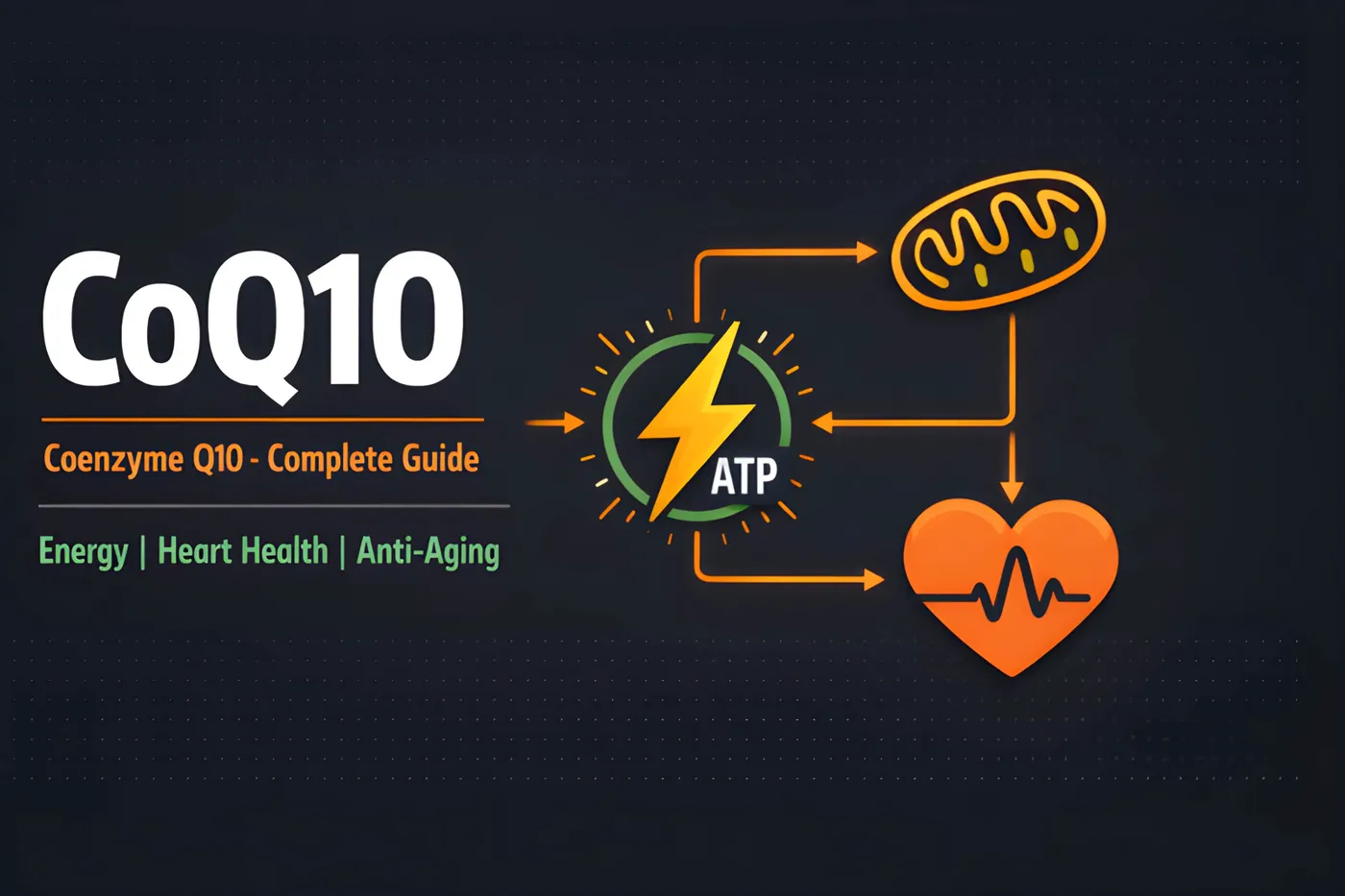
Your body runs on a molecule most people have never heard of. Every heartbeat, every muscle contraction, every thought firing across your brain depends on a steady supply of adenosine triphosphate - ATP. And the compound sitting at the center of that entire energy production chain is coenzyme Q10, better known as CoQ10.
CoQ10 is present in every single cell. It concentrates most heavily in the organs that burn the most fuel: the heart, brain, liver, kidneys, and skeletal muscle [1]. Your body manufactures it endogenously, but production peaks in your mid-twenties and declines steadily after that. By age 65, you’re producing roughly half of what you made at 25 [2]. That matters - because when CoQ10 drops, so does your cells’ ability to generate energy and defend against oxidative damage.
This isn’t just an aging problem. Statin medications, certain health conditions, intense training, nutrient deficiencies, and genetic mutations all accelerate CoQ10 depletion [3]. The result is a growing gap between what your cells need and what they actually get.
Whether you’re an athlete trying to optimize performance, a woman navigating fertility, a man concerned about cardiovascular health, or someone managing statin side effects, understanding CoQ10 can change how you approach supplementation. This guide covers the mechanisms, the evidence, the dosing protocols, and the practical details that actually matter.
How CoQ10 Works: The Mitochondrial Engine
To understand why CoQ10 matters, you need a basic picture of how your cells produce energy.
Mitochondria are the power plants inside nearly every cell. They take the macronutrients you eat - carbohydrates, fats, and proteins - and convert them into ATP through a process called oxidative phosphorylation. This conversion happens along the electron transport chain, a series of protein complexes embedded in the inner mitochondrial membrane.
CoQ10 functions as an electron carrier within this chain. It shuttles electrons from Complex I and Complex II to Complex III, keeping the entire energy production sequence moving [4]. Without adequate CoQ10, the chain stalls. Electrons leak. ATP output drops.
The Dual Role: Energy and Antioxidant Defense
Here’s where CoQ10 gets interesting. Those leaked electrons don’t just disappear - they react with oxygen to form reactive oxygen species (ROS), the free radicals responsible for oxidative damage. CoQ10 in its reduced form (ubiquinol) is one of the body’s most potent lipid-soluble antioxidants, neutralizing these rogue electrons before they can damage mitochondrial membranes, DNA, and cell structures [5].
This creates a dual function that no other compound replicates in quite the same way. CoQ10 simultaneously produces energy and protects the machinery producing it. Think of it as both the fuel line and the firewall for your cellular power plants.
The organs with the highest mitochondrial density - heart, brain, liver, kidneys, skeletal muscle - contain the highest concentrations of CoQ10 [1]. This is not a coincidence. These tissues have enormous energy demands, and they pay the highest price when CoQ10 levels fall short.
Why Levels Decline
Endogenous CoQ10 synthesis requires at least 12 genes and shares a biosynthetic pathway with cholesterol production [6]. Several factors disrupt this process:
- Aging: Production declines progressively after the mid-twenties, with tissue-level reductions documented in the heart, brain, and muscle [7]
- Statin medications: These drugs inhibit HMG-CoA reductase, blocking the same mevalonate pathway that produces CoQ10 [8]
- Intense exercise: High training loads deplete tissue CoQ10 faster than the body can replenish it [9]
- Chronic disease: Heart failure, diabetes, cancer, and neurodegenerative conditions are all associated with reduced CoQ10 status [10]
- Nutrient deficiencies: Inadequate B vitamins and other cofactors impair CoQ10 synthesis [3]
Dietary intake provides only 3-6 mg per day from foods like organ meats, fatty fish, nuts, and vegetable oils [11]. That’s a fraction of therapeutic supplementation doses, which typically range from 100 to 600 mg daily.
CoQ10 Benefits: What the Evidence Actually Shows
The benefits of CoQ10 span cardiovascular health, neurological function, metabolic support, exercise performance, and more. But not all claims carry equal weight. Here’s what the research actually supports, separated by strength of evidence.
Heart Health and Cardiovascular Function
This is the most robust area of CoQ10 research. The heart is the most metabolically active organ in the body, beating roughly 100,000 times per day. It contains the highest concentration of mitochondria of any tissue, and it depends on CoQ10 to sustain that relentless output.
In a randomized, double-blind, placebo-controlled trial of 144 patients with acute myocardial infarction, 120 mg/day of CoQ10 for 28 days significantly reduced angina (9.5% vs. 28.1%), total arrhythmias (9.5% vs. 25.3%), and poor left ventricular function (8.2% vs. 22.5%) compared to placebo. Total cardiac events, including cardiac deaths and nonfatal infarction, were also significantly lower in the CoQ10 group (15.0% vs. 30.9%) [12].
For heart failure specifically, CoQ10 supplementation has demonstrated improvements in ejection fraction, exercise capacity, and NYHA functional class. In patients with hypertrophic cardiomyopathy, 200 mg/day improved diastolic function, quality of life, and reduced interventricular septal thickness by 22.4% [13]. Systolic blood pressure and diastolic blood pressure both respond to CoQ10 supplementation in hypertensive patients [14].
A board-certified cardiovascular surgeon has described CoQ10 as one of his top three supplements for heart health, noting it both scavenges inflammatory processes and directly supports heart muscle function as a cofactor for energy production [2].
Blood Sugar and Metabolic Health
CoQ10 supplementation at doses below 200 mg/day has shown consistent benefits for fasting blood glucose. A meta-analysis of 18 randomized clinical trials found that CoQ10 significantly reduced blood glucose levels, with the greatest effects seen at doses under 200 mg/day administered for 12 weeks or less [15].
In prediabetic patients, 8 weeks of CoQ10 supplementation produced a significant decrease in HOMA-IR (a measure of insulin resistance), with reductions in free oxygen radicals correlating directly with CoQ10 concentrations [16]. The mechanism appears to involve both improved mitochondrial energy metabolism and reduced oxidative stress in pancreatic beta cells.
In animal models of statin-induced diabetes, CoQ10 reversed fasting hyperglycemia, improved glucose tolerance by 20%, enhanced insulin sensitivity more than 2-fold, and fully restored glucose-stimulated insulin secretion that pravastatin had impaired [17].
Brain Health and Neuroprotection
The brain consumes roughly 20% of the body’s total energy despite representing only 2% of body weight. It has a higher concentration of mitochondria per cell than almost any other tissue, making it particularly vulnerable to CoQ10 depletion [18].
CoQ10 supplementation has shown meaningful results across several neurological domains. In children, adolescents, and adults, supplementation significantly decreased the frequency and duration of migraines [18]. Depression, bipolar disorder, and schizophrenia - conditions increasingly recognized as sharing mitochondrial dysfunction - have also responded to CoQ10 in clinical settings. One study found that 1,200 mg/day significantly reduced depressive symptoms in older adults with bipolar disorder [18].
For neurodegenerative conditions, a pilot trial in Parkinson’s disease patients tested escalating doses up to 3,000 mg/day and found the supplement safe and well-tolerated, with plasma levels plateauing at 2,400 mg/day [19]. CoQ10 levels in platelet mitochondria of Parkinson’s patients are significantly lower than in matched controls, and these levels correlate directly with the activities of mitochondrial Complex I and Complex II/III [20].
Research in Alzheimer’s disease models has demonstrated that CoQ10 reduces amyloid-beta deposition and oxidative stress markers while enhancing cognitive function [4].
Inflammation and Liver Function
In patients with nonalcoholic fatty liver disease, 100 mg/day of CoQ10 for 12 weeks significantly reduced liver aminotransferases (AST and GGT), high-sensitivity C-reactive protein, and tumor necrosis factor alpha while increasing adiponectin levels [21]. CoQ10’s anti-inflammatory properties extend beyond the liver - the compound reduces IL-6 and protein carbonyl levels in diabetic patients with coronary heart disease [22].
CoQ10 Benefits for Women
CoQ10 benefits for women extend across fertility, cardiovascular health, skin aging, bone health, and conditions that disproportionately affect female physiology.
Fertility and Egg Quality
Egg quality declines with age, and mitochondrial dysfunction is a primary driver. Each mature oocyte contains approximately 100,000 to 600,000 mitochondria - more than any other cell in the body. These mitochondria provide the massive energy required for proper chromosomal segregation during meiosis. When mitochondrial function falters, the risk of chromosomal abnormalities rises sharply [23].
CoQ10 at doses of 100-400 mg per day supports mitochondrial function essential for this chromosomal segregation, improving egg quality through the same mechanism that supports every other high-energy process in the body [23]. This is covered in more detail in the fertility section below.
Cardiovascular Protection
Heart disease is the leading cause of death in women, often presenting later in life and with different symptoms than in men. The post-menopausal decline in estrogen accelerates oxidative stress and mitochondrial dysfunction - both areas where CoQ10 provides direct support.
Women produce CoQ10 at the same rate as men through their mid-twenties, but the age-related decline intersects with menopause to create a compounding effect. Supplementing with as little as 100 mg per day has shown improvements in quality of life and cardiovascular markers in clinical settings [2].
Fibromyalgia
Fibromyalgia, a chronic pain condition that is significantly more common in women, has responded to CoQ10 supplementation in some clinical trials. Some researchers have called CoQ10 the “gold standard supplement” for reducing fibromyalgia pain, though the evidence base remains mixed [2]. The rationale is sound - fibromyalgia involves mitochondrial dysfunction and elevated oxidative stress, both of which CoQ10 directly addresses. If you have fibromyalgia, a 4-week trial at 200 mg/day is reasonable to assess whether you respond [24].
Skin Health and Anti-Aging
CoQ10 levels in the skin decline with age and UV exposure. Topical application penetrates into the viable layers of the epidermis, reduces oxidation, and measurably decreases wrinkle depth [25]. Internally, CoQ10 suppresses collagenase expression triggered by UVA radiation and prevents oxidative DNA damage in keratinocytes [25]. The topical and oral routes appear complementary - one replenishes the skin directly while the other supports systemic antioxidant defense.
Bone Health
An area of emerging research: CoQ10 promotes osteoblast proliferation and differentiation while protecting against ovariectomy-induced osteoporosis in animal models [26]. The mechanism involves activation of the PI3K/AKT signaling pathway. While human trials are limited, the data is promising for postmenopausal women concerned about bone density.
PCOS
Women with polycystic ovary syndrome may benefit from CoQ10 supplementation. Research shows potential for lowering testosterone levels, improving cholesterol and insulin markers, and supporting fertility outcomes in this population [27].
CoQ10 Benefits for Men
CoQ10 benefits for men center on cardiovascular protection, fertility, athletic performance, and managing the side effects of commonly prescribed medications.
Cardiovascular Health
Men develop cardiovascular disease earlier than women on average, and heart-related conditions remain the leading cause of death in males globally. CoQ10 directly supports the heart’s enormous energy demands. In post-MI patients, supplementation reduces arrhythmias, improves left ventricular function, and lowers the rate of subsequent cardiac events [12].
For men already on statin therapy - one of the most commonly prescribed drug classes - CoQ10 becomes even more relevant. Statins deplete endogenous CoQ10 by blocking the shared mevalonate pathway, potentially compromising the very heart muscle the statins are prescribed to protect [8]. More on this in the statin section below.
Sperm Quality and Male Fertility
CoQ10 supports sperm quality through the same mitochondrial mechanism that drives egg quality. Sperm cells require enormous amounts of energy for motility, and their mitochondria are concentrated in the midpiece - the section that powers the flagellum. CoQ10 at 100-400 mg/day improves the likelihood of fertility in men by enhancing mitochondrial function during sperm development and maturation [23].
Men tend to have higher baseline CoQ10 levels than women [28], but intense training, aging, and metabolic stress can still create deficiency states that impact reproductive health.
Athletic Performance
For physically active men, CoQ10 has shown the most consistent performance benefits at doses of 300 mg or higher. In a study of 100 elite athletes preparing for the Olympic Games, 300 mg/day of ubiquinol for six weeks enhanced peak power production compared to placebo [29]. A correlation between total blood CoQ10 levels above 3.3 mcg/mL and improved total workload has been observed in trained cyclists [29].
Earlier studies using lower doses (100 mg or less) generally failed to show performance benefits, which likely explains the mixed reputation CoQ10 has in sports nutrition circles [29]. The evidence increasingly points to a threshold effect - you need sufficient dosing to meaningfully raise plasma and tissue levels.
In older athletes taking statins, 200 mg/day of CoQ10 for 6 weeks significantly increased time to anaerobic threshold and improved leg extension strength [30]. The combination of statin-induced CoQ10 depletion and exercise-induced oxidative stress creates a scenario where supplementation provides clear, measurable benefit.
Oxidative Stress and Recovery
A meta-analysis of 14 randomized controlled trials found that oral CoQ10 supplementation elevated blood CoQ10 concentrations, reduced malondialdehyde (a marker of lipid peroxidation), and decreased creatine kinase values - indicating a protective effect on skeletal muscle during and after exercise [31]. For men who train intensely, this translates to better recovery and less exercise-induced muscle damage.
CoQ10 for Fertility: How It Supports Both Egg and Sperm Quality
CoQ10 for fertility has become one of the most well-supported applications of this supplement, relevant to both partners trying to conceive.
The Mitochondrial Connection to Reproduction
Reproduction is one of the most energy-intensive biological processes. Both egg maturation and sperm development depend on mitochondria functioning at peak capacity. CoQ10 infertility interventions target this fundamental energy requirement.
During oocyte development, mitochondria must supply enough ATP to power proper chromosomal segregation - the process that ensures each egg receives exactly 23 chromosomes. When mitochondrial function declines, the error rate in this process climbs. This is why maternal age is the single strongest predictor of chromosomal abnormalities: older eggs have older, less efficient mitochondria [23].
CoQ10 addresses this directly. At doses of 100-400 mg per day, it enhances the electron transport chain’s efficiency, increases ATP production, and reduces the oxidative damage that accumulates in aging mitochondria [23]. The result is improved egg quality - not by reversing the clock, but by maximizing the function of the mitochondria that remain.
For men, sperm motility depends on a constant supply of ATP from mitochondria packed into the sperm’s midpiece. CoQ10 supplementation supports this energy production while simultaneously protecting sperm DNA from oxidative damage.
Practical Fertility Protocol
Based on available evidence, a reasonable fertility-support protocol looks like this:
- Dose: 200-400 mg/day for both partners
- Form: Ubiquinol preferred for those over 30; ubiquinone acceptable for younger individuals
- Timing: Begin at least 3 months before conception attempts (matching the timeline of egg maturation and sperm development cycles)
- Administration: Take later in the day, with a fat-containing meal for optimal absorption [23]
- Duration: Continue through conception attempts
Those without fertility concerns generally don’t need CoQ10 specifically for reproductive health [23]. But for couples actively trying to conceive - especially those over 35 or with unexplained infertility - the mitochondrial support CoQ10 provides represents one of the most evidence-based supplement interventions available.
CoQ10 and Statins: Why This Combination Matters
The relationship between CoQ10 and statins is one of the most clinically significant supplement-drug interactions, yet it remains controversial in mainstream medicine.
How Statins Deplete CoQ10
Statins work by inhibiting HMG-CoA reductase, the rate-limiting enzyme in cholesterol synthesis. The problem is that this same enzyme sits upstream in the mevalonate pathway - the pathway that also produces CoQ10. When you block HMG-CoA reductase to lower cholesterol, you simultaneously reduce CoQ10 biosynthesis [8].
This isn’t a theoretical concern. Statin drugs and CoQ10 depletion has been documented repeatedly:
- Statin treatment reliably reduces circulating CoQ10 levels [32]
- In animal studies, statins reduce mitochondrial CoQ10 in liver tissue by up to 75% [17]
- Simvastatin decreases mitochondrial CoQ10 in liver cells, increasing cell death, oxidative DNA damage, and reducing ATP synthesis [33]
- The depletion affects the very organs statins are prescribed to protect - particularly the heart and skeletal muscle
Statin-Associated Muscle Symptoms
Muscle pain, weakness, and cramping affect an estimated 5-25% of statin users, depending on the study population [34]. This range is wide because industry-funded trials report rates below 1%, while observational studies find rates as high as 60% [34]. The real-world number likely falls somewhere in between, but even the conservative estimate means millions of people worldwide experience these symptoms.
The hypothesis that CoQ10 depletion drives statin myopathy is mechanistically compelling. Skeletal muscle is metabolically active, mitochondria-dense tissue. Reduce its CoQ10 supply and you’d expect exactly the symptoms patients report: fatigue, pain, weakness.
The clinical evidence, however, is mixed. Some trials show clear benefit:
- In 50 statin users, 100 mg/day CoQ10 reduced muscle pain and improved daily function [35]
- In 20 athletes taking statins, 200 mg/day improved muscle strength [35]
- In older athletes on statins, 200 mg/day improved anaerobic threshold and leg extension performance [30]
Other trials find no significant difference between CoQ10 and placebo for statin myalgia [36]. A meta-analysis of six trials found no statistically significant benefit, though a trend toward decreased muscle pain was observed [37].
Why the inconsistency? Several methodological issues muddy the waters. Many patients reporting “statin myalgia” may actually have non-specific muscle pain unrelated to statins - a nocebo effect confirmed in blinded crossover trials [34]. Additionally, oral CoQ10’s ability to increase intramuscular (not just blood) CoQ10 levels is not firmly established in humans [34].
How Much CoQ10 Should I Take with Statins
Despite the mixed trial data, the mechanistic rationale remains strong, and the risk-benefit calculation overwhelmingly favors supplementation. CoQ10 has an excellent safety profile, while statin-induced CoQ10 depletion has documented negative effects on mitochondrial function.
How much CoQ10 should I take with statins? Based on the available evidence:
- Minimum effective dose: 100 mg/day
- Standard recommendation: 200 mg/day
- For those with active muscle symptoms: 200-400 mg/day
- Form: Ubiquinol preferred for those over 40, as conversion efficiency from ubiquinone declines with age
- Timing: Take with a fat-containing meal, at a different time than the statin if possible
CoQ10 supplementation can also protect against statin-induced beta-cell toxicity, reversing the hyperglycemia and impaired insulin secretion that some statins produce [17]. This is particularly relevant for patients with prediabetes or metabolic syndrome who are prescribed statins.
The bottom line: if you’re on a statin, there’s no good reason not to supplement with CoQ10. The potential benefit is significant, the risk is essentially zero, and the mechanistic rationale is bulletproof even if every clinical trial isn’t perfectly consistent.
How Many mg of Coenzyme Q10 Should I Take: Complete Dosing Guide
CoQ10 dosing varies substantially based on your goals, health status, and age. Here’s a practical breakdown.
General Health and Maintenance
For otherwise healthy adults looking to maintain CoQ10 levels as endogenous production declines:
- Age 25-40: 100 mg/day
- Age 40-65: 100-200 mg/day
- Age 65+: 200 mg/day
These ranges align with expert recommendations for maintaining healthy levels in non-deficient individuals [7]. How many mg of coenzyme q10 should I take ultimately depends on your specific situation, but this is the baseline.
Condition-Specific Dosing
| Condition | Daily Dose | Duration |
|---|---|---|
| General antioxidant support | 100-200 mg | Ongoing |
| Statin side effect mitigation | 200-400 mg | Duration of statin therapy |
| Heart failure | 200-400 mg | Ongoing, with medical supervision |
| Post-myocardial infarction | 120 mg | At least 28 days, often ongoing |
| Fertility support | 200-400 mg | 3+ months |
| Athletic performance | 300 mg | 4-6+ weeks |
| Migraine prevention | 100-300 mg | 3+ months |
| Blood sugar management | 100-200 mg | 8-12 weeks |
| Neurodegenerative conditions | 600-2,400 mg | Ongoing, with medical supervision |
| CoQ10 deficiency | 800 mg (adults) | Until levels normalize |
For most studied conditions, 100-300 mg of ubiquinone divided into two daily doses is effective [38]. Higher doses are reserved for neurodegenerative conditions, where 1,200 mg/day has been shown safe for long-term use and up to 3,000 mg/day is tolerated for shorter periods [19][39]. Importantly, plasma levels plateau at around 2,400 mg/day - going higher provides no additional increase in blood CoQ10 [19].
The Dose-Response Curve
CoQ10 absorption follows a predictable pattern. A single 30 mg dose barely moves the needle in non-deficient individuals. At 200 mg/day, plasma levels increase approximately 6-fold [40]. A dose-dependent increase is observed up to 200 mg, after which additional increases require proportionally higher doses.
Taking 200 mg twice daily with food is considered the average dosage needed to maintain therapeutic blood levels for most people [41]. This is a reasonable target for anyone with a health concern that warrants supplementation.
Ubiquinone vs. Ubiquinol: Which Form Should You Take
CoQ10 supplements come in two forms, and the debate about which is “better” generates more heat than light.
Ubiquinone is the oxidized form. It’s the most commonly studied form in clinical trials, the most widely available, and generally less expensive. Your body converts ubiquinone to ubiquinol (and back) as needed - this interconversion is constant and bidirectional [41].
Ubiquinol is the reduced, active antioxidant form. It accounts for approximately 95% of the CoQ10 circulating in your blood [42]. Proponents argue it’s “pre-converted” and therefore more bioavailable.
What the Bioavailability Data Actually Shows
A randomized crossover study in healthy elderly individuals found that a water-soluble ubiquinone formulation had 2.4-fold higher bioavailability than standard ubiquinone capsules, while ubiquinol capsules showed only a 1.7-fold increase that didn’t reach statistical significance [43]. This suggests formulation technology matters more than which form you choose.
In a double-blind crossover trial, ubiquinol raised plasma CoQ10 status more effectively than standard ubiquinone in men over 40 [44]. For younger, healthy individuals, the conversion capacity is robust enough that ubiquinone works perfectly well.
Practical Recommendations
- Under 30, healthy: Ubiquinone is fine. It’s cheaper and your body converts it efficiently.
- Over 30-40, or with any health condition: Ubiquinol is the safer bet. Conversion efficiency declines with age and disease.
- Regardless of form: Look for soft-gel capsules with an oil-based matrix. These absorb significantly better than dry powder capsules or tablets [45].
- Avoid taking with vitamin C and vitamin E simultaneously - both may reduce CoQ10 absorption when taken at the same time [38].
The most important factor isn’t ubiquinone vs. ubiquinol - it’s whether the formulation dissolves and absorbs well. A high-quality ubiquinone soft-gel will outperform a poorly formulated ubiquinol powder every time.
Timing, Absorption, and Stacking
When to Take CoQ10
CoQ10 is fat-soluble. Always take it with a meal containing dietary fat - this dramatically improves absorption [38]. Beyond that, the timing debate is less settled than marketers would have you believe.
Most integrative physicians recommend morning dosing, when energy demands are naturally higher and you’re more likely to remember [46]. Some fertility specialists suggest later-in-the-day dosing may be slightly more advantageous, though the evidence for this is thin [23].
The honest answer: consistency matters more than timing. Take it when you’ll actually remember to take it, with a meal that contains some fat.
Absorption Challenges
CoQ10 is a large, hydrophobic molecule. Even under ideal conditions, absorption is slow and limited, with a Tmax (time to peak plasma concentration) of approximately 4-6 hours and an elimination half-life of about 33 hours [47]. Absorption varies significantly between individuals due to differences in gut bacteria and fat absorption capacity [38].
Strategies to maximize absorption:
- Take with fat: Non-negotiable. A meal with olive oil, avocado, nuts, or fatty fish works well.
- Choose soft-gel or liquid formulations: These absorb better than powders and tablets [45].
- Split larger doses: If taking 300+ mg/day, divide into two doses (morning and evening with meals) rather than taking it all at once.
- Avoid concurrent vitamin C/E: These can compete with CoQ10 absorption. Space them apart by a few hours if you take both [38].
Synergistic Stacking
CoQ10 works well in combination with several other compounds:
- PQQ (pyrroloquinoline quinone): While CoQ10 optimizes existing mitochondria, PQQ promotes the growth of new mitochondria. Clinical trials show the combination enhances memory, spatial awareness, and overall cognitive function more than either alone [48].
- Alpha-lipoic acid: Combined with CoQ10, this may reduce inflammation through epigenetic effects while providing complementary antioxidant support across both water-soluble and fat-soluble compartments [49].
- Shilajit: This Himalayan compound enhances CoQ10’s bioavailability and has been shown to work synergistically for energy production and cellular protection [50].
- Acetyl-L-carnitine: Shuttles fatty acids into mitochondria for oxidation, complementing CoQ10’s role in the electron transport chain.
- BioPerine (black pepper extract): Enhances absorption of fat-soluble compounds including CoQ10 [51].
Side Effects, Safety, and Drug Interactions
CoQ10 has one of the strongest safety profiles of any supplement. Doses up to 1,200 mg/day are safe for long-term use, and up to 3,000 mg/day has been tolerated in short-term trials (8 months) without serious adverse effects [39][19].
Common Side Effects
Most people experience no side effects at standard doses. A small percentage report:
- Mild gastrointestinal discomfort (nausea, stomach upset)
- Headache
- Dizziness
- Sensitivity to light
- Insomnia (rare, usually only at high doses taken late in the day)
Some individuals report fatigue specifically with ubiquinol but not ubiquinone, or vice versa [42]. If one form doesn’t agree with you, try the other.
Drug Interactions
CoQ10 can interact with several medication classes:
- Blood thinners (Warfarin): CoQ10 has a structural similarity to vitamin K and may reduce the anticoagulant effect of warfarin. If you’re on blood thinners, work with your physician and monitor INR when starting or changing CoQ10 doses [42].
- Blood pressure medications: CoQ10 can lower blood pressure, potentially enhancing the effects of antihypertensive drugs. This is usually beneficial but requires awareness [42].
- Blood sugar medications: CoQ10 can lower blood glucose, which may require dose adjustments in diabetic medications [42].
- Theophylline: CoQ10 pretreatment significantly altered theophylline pharmacokinetics in animal studies, approximately doubling maximum plasma concentration [52]. If you take theophylline for asthma or COPD, consult your physician.
- Chemotherapy agents: CoQ10 may provide protection against cardiotoxicity from anthracyclines, but should only be used under oncological supervision during active cancer treatment [53].
Who Should Not Take CoQ10
There are no absolute contraindications for CoQ10 in healthy individuals. However, caution is warranted for:
- People on warfarin or other anticoagulants (monitor closely)
- Pregnant or breastfeeding women (limited safety data at supplemental doses, though CoQ10 naturally increases during pregnancy [28])
- Anyone undergoing active cancer treatment (consult your oncologist)
Longevity and the Bigger Picture
CoQ10’s role extends beyond treating specific conditions. At its core, this compound represents one of the most fundamental levers for cellular health maintenance.
Mitochondrial dysfunction is increasingly recognized as a central driver of aging itself - not just a consequence of it. As mitochondria accumulate damage and lose efficiency over decades, the downstream effects touch every system: cardiovascular function, cognitive performance, immune regulation, metabolic health, and physical capacity [7].
A four-year trial in elderly adults found that CoQ10 supplementation significantly reduced hospitalization time and preserved quality of life [54]. These aren’t dramatic “anti-aging” claims - they’re practical outcomes that reflect what happens when cells maintain adequate energy production and antioxidant defense as they age.
The immune system also benefits. Animal research demonstrates that CoQ10 enhances mononuclear macrophage activity and natural killer cell function while favorably modulating gut microbiota composition [55]. This immunomodulatory effect has implications for both infection resistance and chronic inflammatory conditions.
For anyone serious about longevity optimization, CoQ10 belongs in the conversation alongside the better-known interventions. It’s not glamorous. It won’t make headlines. But it addresses arguably the most fundamental bottleneck in cellular health - the ability to produce clean energy efficiently while minimizing the collateral damage from that production.
Frequently Asked Questions
What Is CoQ10 and What Does It Do?
CoQ10 is a fat-soluble compound found in every cell in your body, concentrated most heavily in the heart, brain, liver, kidneys, and muscles. It serves two critical functions: shuttling electrons in the mitochondrial electron transport chain to produce ATP (cellular energy), and acting as a powerful antioxidant that protects cell membranes from oxidative damage [1]. Your body produces it naturally but production declines with age, making supplementation increasingly relevant after your mid-twenties.
What Is CoQ10 Good For?
The strongest evidence supports CoQ10 for cardiovascular health (particularly heart failure, post-heart attack recovery, and blood pressure support), mitigating statin side effects, fertility enhancement for both men and women, blood sugar management, and migraine prevention. Emerging evidence also supports roles in neurodegenerative diseases, liver health, exercise performance, and depression [10][12][23][15].
How Much CoQ10 Should I Take?
For general health maintenance, 100-200 mg/day is standard. For statin users, 200-400 mg/day. For fertility support, 200-400 mg/day. For athletic performance, 300 mg/day. For neurodegenerative conditions, 600-2,400 mg/day under medical supervision. Always take with a fat-containing meal to maximize absorption [3][38].
How Many mg of CoQ10 Should I Take with Statins?
Start with 200 mg/day and increase to 400 mg/day if muscle symptoms persist. Ubiquinol is preferred over ubiquinone for statin users, especially those over 40, as the conversion pathway may be compromised. Continue supplementation for the entire duration of statin therapy, since the depletion mechanism is ongoing [8][34].
Is Ubiquinol Better Than Ubiquinone?
Not universally. Ubiquinol is the reduced, active form and may be better absorbed by older adults and those with compromised conversion capacity. However, formulation quality (soft-gel vs. powder, oil-based vs. dry) has a larger impact on bioavailability than the form itself [43][45]. Healthy individuals under 30 can use the less expensive ubiquinone form effectively.
Compare Alternatives
References
- Neurohacker Collective. “Coenzyme Q10.” (https://www.qualialife.com/formulation/coenzyme-q10)
- Women’s Health Magazine. “Should Every Woman Over 40 Be Taking A CoQ10 Supplement? Doctors Weigh In.” (https://www.womenshealthmag.com/health/a69020846/coq10-benefits-women-health/)
- Healthline. “How Much CoQ10 Should You Take per Day?” (https://www.healthline.com/nutrition/coq10-dosage)
- “Edible Bird’s Nest as a Multi-Component Functional Food for Brain Aging: From Single-Bioactive Actions to Network-Regulatory Mechanisms.” PubMed Central. (https://pmc.ncbi.nlm.nih.gov/articles/PMC12943201/)
- Thomas DeLauer. “CoQ10 as Fat-Soluble Antioxidant.” (https://www.youtube.com/watch?v=oScnw_GFTBk)
- “Coenzyme Q10 and statin-related myopathy.” PubMed. (https://pubmed.ncbi.nlm.nih.gov/25977402/)
- Nootropics Expert. “Coenzyme Q10 (CoQ10).” (https://nootropicsexpert.com/coenzyme-q10/)
- Dr. Sten Ekberg. “Statin Side-Effects & CoQ10 Depletion.” (https://www.youtube.com/watch?v=tJn5EE3fMDs)
- Thomas DeLauer. “CoQ10 Basics & Mitochondrial Energy Creation.” (https://www.youtube.com/watch?v=oScnw_GFTBk)
- Healthline. “9 Benefits and Side Effects of Coenzyme Q10 (COQ10).” (https://www.healthline.com/nutrition/coenzyme-q10)
- “Coenzyme Q10 contents in foods and fortification strategies.” PubMed. (https://pubmed.ncbi.nlm.nih.gov/20301015/)
- “Randomized, double-blind placebo-controlled trial of coenzyme Q10 in patients with acute myocardial infarction.” PubMed. (https://pubmed.ncbi.nlm.nih.gov/9825179/)
- “Coenzyme Q10 (CoQ10) in isolated diastolic heart failure in hypertrophic cardiomyopathy (HCM).” PubMed. (https://pubmed.ncbi.nlm.nih.gov/19096110/)
- “Efficacy of coenzyme Q10 in supportive therapy of the cardiovascular diseases and in the prevention of cardiotoxicity caused by chemotherapy.” PubMed. (https://pubmed.ncbi.nlm.nih.gov/33895766/)
- “A meta-analysis of randomized and placebo-controlled clinical trials suggests that coenzyme Q10 at low dose improves glucose and HbA1c levels.” PubMed. (https://pubmed.ncbi.nlm.nih.gov/28381349/)
- “Effect of Coenzyme Q10 on Insulin Resistance in Korean Patients with Prediabetes.” PubMed. (https://pubmed.ncbi.nlm.nih.gov/30151373/)
- “Coenzyme Q10 protects against beta-cell toxicity induced by pravastatin treatment of hypercholesterolemia.” PubMed. (https://pubmed.ncbi.nlm.nih.gov/30536661/)
- Nootropics Expert. “Coenzyme Q10 (CoQ10) - Brain Function and Mental Health.” (https://nootropicsexpert.com/coenzyme-q10/)
- “Pilot trial of high dosages of coenzyme Q10 in patients with Parkinson’s disease.” PubMed. (https://pubmed.ncbi.nlm.nih.gov/15246848/)
- “Coenzyme Q10 levels correlate with the activities of complexes I and II/III in mitochondria from parkinsonian and nonparkinsonian subjects.” PubMed. (https://pubmed.ncbi.nlm.nih.gov/9266740/)
- “Functions of Coenzyme Q10 Supplementation on Liver Enzymes, Markers of Systemic Inflammation, and Adipokines in Patients Affected by Nonalcoholic Fatty Liver Disease.” PubMed. (https://pubmed.ncbi.nlm.nih.gov/26156412/)
- “The effects of coenzyme Q10 supplementation on cardiometabolic markers in overweight type 2 diabetic patients with stable myocardial infarction.” PubMed. (https://pubmed.ncbi.nlm.nih.gov/28149310/)
- Huberman Lab. “Coenzyme Q10 (CoQ10) for Fertility.” (https://www.youtube.com/watch?v=O1YRwWmue4Y)
- Legion Athletics. “The Top 3 Benefits of CoQ10 (According to Science).” (https://legionathletics.com/coq10-benefits/)
- “Coenzyme Q10, a cutaneous antioxidant and energizer.” PubMed. (https://pubmed.ncbi.nlm.nih.gov/10416055/)
- “Coenzyme Q10 promotes osteoblast proliferation and differentiation and protects against ovariectomy-induced osteoporosis.” PubMed. (https://pubmed.ncbi.nlm.nih.gov/29115467/)
- PCOS Nutrition. “Health Benefits of Coenzyme Q10 For PCOS.” (https://www.pcosnutrition.com/coenzymeq10/)
- SelfHacked. “Coenzyme Q10 Lab Test, Normal & Low Levels + Causes.” (https://selfhacked.com/blog/coenzyme-q10-lab-test)
- “Ubiquinol supplementation enhances peak power production in trained athletes: a double-blind, placebo controlled study.” PubMed Central. (https://pmc.ncbi.nlm.nih.gov/articles/PMC3661336/)
- “Impact of coenzyme Q-10 on parameters of cardiorespiratory fitness and muscle performance in older athletes taking statins.” PubMed. (https://pubmed.ncbi.nlm.nih.gov/23306418/)
- “Effects of coenzyme Q10 analogs on oxidative stress, muscle, and metabolism after exercise: A meta-analysis and systematic review.” PubMed. (https://pubmed.ncbi.nlm.nih.gov/41657017/)
- “The role of coenzyme Q10 in statin-associated myopathy: a systematic review.” PubMed. (https://pubmed.ncbi.nlm.nih.gov/17560286/)
- “Reduced mitochondrial coenzyme Q10 levels in HepG2 cells treated with high-dose simvastatin.” PubMed. (https://pubmed.ncbi.nlm.nih.gov/17610923/)
- “Does Coenzyme Q10 Supplementation Mitigate Statin-Associated Muscle Symptoms? Pharmacological and Methodological Considerations.” PubMed. (https://pubmed.ncbi.nlm.nih.gov/29027135/)
- SelfHacked. “25 Coenzyme Q10 (CoQ10) Benefits (incl. Blood Pressure).” (https://selfhacked.com/blog/coenzyme-q10-benefits)
- “A randomized trial of coenzyme Q10 in patients with confirmed statin myopathy.” PubMed. (https://pubmed.ncbi.nlm.nih.gov/25545331/)
- “Effects of coenzyme Q10 on statin-induced myopathy: a meta-analysis of randomized controlled trials.” PubMed. (https://pubmed.ncbi.nlm.nih.gov/25440725/)
- SelfHacked. “What is Coenzyme Q10 (CoQ10)? + Side Effects & Dosage.” (https://selfhacked.com/blog/coenzyme-q10-ubiquinol)
- “Tolerance of high-dose (3,000 mg/day) coenzyme Q10 in ALS.” PubMed. (https://pubmed.ncbi.nlm.nih.gov/16344537/)
- “Coenzyme Q10: absorption, antioxidative properties, determinants, and plasma levels.” PubMed. (https://pubmed.ncbi.nlm.nih.gov/12069102/)
- Healthline. “9 Benefits and Side Effects of Coenzyme Q10 (COQ10) - Dosage Section.” (https://www.healthline.com/nutrition/coenzyme-q10)
- Nootropics Expert. “Coenzyme Q10 (CoQ10) - Side Effects and Forms.” (https://nootropicsexpert.com/coenzyme-q10/)
- “Comparative Bioavailability of Different Coenzyme Q10 Formulations in Healthy Elderly Individuals.” PubMed. (https://pubmed.ncbi.nlm.nih.gov/32188111/)
- MPMD. “CoQ10 vs Ubiquinol - Preference for Ubiquinol in Older Adults.” (https://www.youtube.com/watch?v=_jfsgeIclN0)
- “Bioavailability of coenzyme Q10 supplements depends on carrier lipids and solubilization.” PubMed. (https://pubmed.ncbi.nlm.nih.gov/30153575/)
- Women’s Health Magazine. “This Is The Best Time Of Day To Take CoQ10 For Maximum Health Benefits, According To Doctors.” (https://www.womenshealthmag.com/health/a64173877/best-time-of-day-to-take-coq10/)
- “Coenzyme Q10: absorption, tissue uptake, metabolism and pharmacokinetics.” PubMed. (https://pubmed.ncbi.nlm.nih.gov/16551570/)
- Nootropics Expert. “Synergistic Cognitive Benefits with CoQ10.” (https://www.youtube.com/watch?v=ow7AxuXbtKg)
- Thomas DeLauer. “Coenzyme Q10 and Mitochondrial Protection.” (https://www.youtube.com/watch?v=QCupQPo5LpA)
- Breaking Muscle. “Leverage the Power of CoQ10 for Longevity and Physical Performance.” (https://breakingmuscle.com/leverage-the-power-of-coq10-for-longevity-and-physical-performance/)
- MPMD. “CoQ10 for Heart-Muscle Function.” (https://www.youtube.com/watch?v=-EYlit7J1nk)
- “The effect of coenzyme Q10 on the pharmacokinetic parameters of theophylline.” PubMed. (https://pubmed.ncbi.nlm.nih.gov/18704339/)
- “Efficacy of coenzyme Q10 for improved tolerability of cancer treatments: a systematic review.” PubMed. (https://pubmed.ncbi.nlm.nih.gov/15514384/)
- Thomas DeLauer. “CoQ10 for Longevity & Energy.” (https://www.youtube.com/watch?v=-6hKpNY11V8)
- “Coenzyme Q10 modulates the immunity by enhancing mononuclear macrophage, NK cell activity, and regulating gut microbiota.” PubMed. (https://pubmed.ncbi.nlm.nih.gov/40165818/)